




Order M-Sand and P-Sand Online in Mysore

Order M-Sand and P-Sand Online in Mysore – Construction Sand
Order M-Sand and P-Sand Online in Mysore with a reliable construction materials supplier who understands the needs of homeowners, builders, contractors, engineers, and construction companies. Whether you are starting a new house, constructing a commercial building, renovating an existing property, or managing a large construction project, choosing the right sand is an important step towards quality construction.
We supply a wide range of construction materials in Mysore, from foundation materials to finishing products. Our range includes M-Sand, P-Sand, concrete sand, plastering sand, aggregates, jelly, cement, and other essential building materials, subject to availability. Our goal is to help customers source the materials they need from one convenient supplier.
Finding suitable sand is not just about choosing the lowest price. You should also consider the intended application, particle size, cleanliness, consistency, quantity required, and transportation arrangements. Using the appropriate material can help you plan your construction work more efficiently and reduce unnecessary delays.
In this guide, we explain the different types of sand, their uses, how to select the right option for your project, what to consider before ordering, and how to arrange construction material delivery in Mysore.
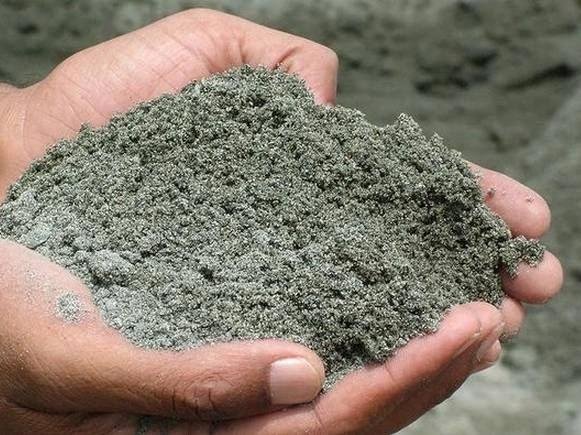
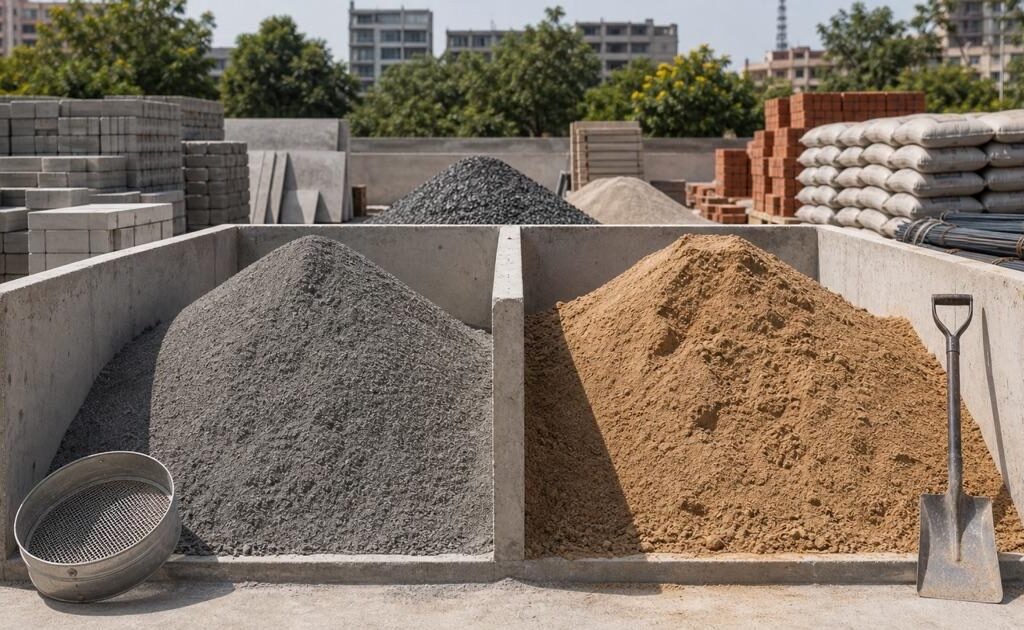
Table of Contents
- Why Order M-Sand and P-Sand Online in Mysore?
- Types of Construction Sand We Supply
- What Is M-Sand?
- What Is P-Sand?
- What Is Concrete Sand?
- Other Types of Sand for Construction
- M-Sand vs P-Sand vs Concrete Sand
- Which Sand Is Best for Your Construction Project?
- Benefits of Buying Sand from One Supplier
- How to Order Sand Online in Mysore
- Factors That Affect Sand Prices in Mysore
- Tips for Choosing a Reliable Sand Supplier
- Construction Materials Available from Foundation to Finish
- Sand Delivery for Residential and Commercial Projects
- Common Mistakes to Avoid When Buying Sand
- Frequently Asked Questions
- Order Construction Sand in Mysore Today

1. Why Order M-Sand and P-Sand Online in Mysore?
Construction projects require several materials at different stages. Arranging every material separately can take time, especially when you need to coordinate quantities, delivery schedules, unloading, and payments.
Ordering sand online or through a supplier’s phone or WhatsApp service makes the purchasing process more convenient. You can enquire about the available materials, explain your construction requirements, request a quotation, and coordinate delivery without visiting multiple suppliers.
When you order M-Sand and P-Sand online in Mysore, consider the following benefits:
- Convenient enquiries: Ask about material availability, quantity, rates, and delivery arrangements from your home or construction site.
- Better project planning: Arrange deliveries according to the construction schedule and available storage space.
- Material selection: Compare sand types according to the work being carried out.
- Bulk-order coordination: Discuss the requirements of individual houses, apartments, commercial buildings, and larger projects.
- Multiple material requirements: Enquire about sand, cement, aggregates, jelly, and other building materials through one supplier.
- Local delivery coordination: Share your site location so that the supplier can confirm delivery feasibility and transport charges.
Online ordering does not always mean that a supplier has a shopping cart or instant checkout facility. If you prefer to enquire by phone or WhatsApp, you can still request a quotation and arrange your order remotely.
Our aim is to make construction material procurement simpler for customers across Mysore, subject to the service locations and delivery arrangements confirmed by our team.
2. Types of Construction Sand We Supply
Different construction activities require different types and grades of fine aggregate. The right selection depends on the application, specifications, and instructions from your engineer or contractor.
We cater to enquiries for a range of construction sand products, subject to availability and project requirements.
M-Sand for Concrete and Structural Work
Manufactured sand, commonly called M-Sand, is produced by processing suitable rock through crushing, screening, and grading. It is commonly used as a fine aggregate in concrete when the material meets the applicable project specifications.
M-Sand is worth considering for concrete-related work where the engineer or mix-design specification permits it.
P-Sand for Plastering Work
P-Sand is a commonly used trade name for plastering sand. It is generally processed to provide a finer texture suitable for plastering applications.
Its grading, cleanliness, and consistency should be checked before use. The appropriate sand should be selected according to the plastering requirements and the specification followed by the contractor.
Concrete Sand
Concrete sand is a term used for sand intended for concrete production. Depending on the supplier and product specification, it may refer to manufactured sand or another suitable fine aggregate.
Before placing an order, confirm the material’s grading and suitability for the concrete mix specified by your engineer.
Plastering Sand
Plastering sand is selected for surface-finishing applications. Its texture and grading can influence workability, application, and the appearance of the finished plaster.
Masonry Sand
Masonry sand is used for mortar in brickwork and blockwork where the material meets the applicable requirements. Ask your contractor which grading is suitable for the particular masonry application.
River Sand and Other Fine Aggregates
Where legally sourced and available, natural sand may be considered for applications specified by the project team. Availability, source, permitted use, and quality should be confirmed before ordering.
Other Sand and Aggregate Requirements
Depending on the project, customers may also enquire about graded aggregates, crushed stone products, and other construction materials. These products serve different purposes and should not be treated as interchangeable with sand.
Important: Product names can vary between suppliers. Always confirm the actual material, grading, intended use, and applicable specification instead of relying on the name alone.
3. What Is M-Sand?
M-Sand stands for manufactured sand. It is produced by mechanically crushing suitable rock into smaller particles and processing the material to achieve the required grading.
Manufactured sand is widely used as an alternative to natural sand in construction applications when it meets the relevant technical requirements. The quality of M-Sand depends on the source rock, manufacturing process, particle characteristics, grading, and control of unwanted fines and impurities.
Common Uses of M-Sand
M-Sand may be suitable for:
- Concrete production, when approved by the project specification.
- Reinforced concrete work, subject to the approved mix design.
- Certain masonry and mortar applications when the material meets the relevant requirements.
- Other construction applications specified by the engineer.
The type of M-Sand supplied for one application should not automatically be assumed suitable for every other application.
What Makes Good-Quality M-Sand?
When purchasing manufactured sand, consider these factors:
1. Appropriate grading
Particle-size distribution affects how sand works with cement, water, and coarse aggregates. The grading should suit the intended application.
2. Suitable source material
The source rock should be appropriate for the intended construction use and comply with the relevant requirements.
3. Controlled fines and impurities
Excessive unwanted fines, clay, organic matter, or other impurities can affect performance. The acceptable limits depend on the material category and applicable specification.
4. Consistent supply
Consistency between deliveries makes it easier for contractors to maintain their approved material proportions and working methods.
5. Testing where required
For structural concrete or other critical applications, request relevant test documentation and follow the engineer’s material approval process.
Is M-Sand Suitable for Every Construction Job?
No. M-Sand is not a single, universally interchangeable product. Manufactured sand should be selected according to its grading and intended application.
For example, the material suitable for concrete may differ from the finer product selected for plastering. Ask your contractor or engineer to confirm the correct material before ordering.
4. What Is P-Sand?
P-Sand generally refers to plastering sand, a construction sand product intended for plastering walls and ceilings. It is usually processed with plastering requirements in mind.
Plastering is an important finishing activity because it creates a surface for painting, texture coatings, or other finishes. Selecting suitable sand can help the mason achieve the required workability and surface quality.
Common Uses of P-Sand
P-Sand is commonly selected for:
- Internal wall plastering.
- External wall plastering, where the product meets the project requirements.
- Ceiling plastering, where specified.
- Other plastering applications approved by the contractor.
The suitability of a particular product depends on its properties and the required finish.
Why Is the Texture of P-Sand Important?
Sand texture affects how mortar feels during mixing and application. Sand that is too coarse or inconsistent may make it difficult to achieve the desired surface finish. Excessively fine or unsuitable material can also affect water demand and the properties of the mortar.
The aim is to use sand with appropriate grading, cleanliness, and consistency for the specified plastering work.
How Much P-Sand Do You Need?
The required quantity depends on:
- Total wall or ceiling area.
- Specified plaster thickness.
- Openings such as doors and windows.
- Surface irregularities.
- Mortar mix proportions.
- Material wastage and site conditions.
For a preliminary estimate, your contractor can calculate the plaster volume using the measured surface area and specified thickness. The actual sand quantity should then be determined according to the mortar mix and expected site requirements.
Can You Use M-Sand Instead of P-Sand?
Do not assume that the two are interchangeable simply because both are manufactured from stone. Their grading and intended applications may differ.
Use the product specified for the work and consult your contractor if you are considering an alternative.
5. What Is Concrete Sand?
Concrete sand is sand selected for use as fine aggregate in concrete production. It works with cement, water, and coarse aggregate to form the concrete mixture.
Concrete performance depends on the combined properties and proportions of the materials, not on sand alone. The grading, particle characteristics, cleanliness, water content, and mix design all matter.
Where Is Concrete Sand Used?
Depending on its specification and approval, suitable concrete sand can be used for:
- Foundations and footings.
- Columns and beams.
- Slabs and roofs.
- Reinforced concrete elements.
- Other concrete applications included in the approved design.
The structural engineer’s specification and approved concrete mix should determine the material selection.
What Should You Check Before Buying Concrete Sand?
Before placing your order, ask about:
- The material’s intended application.
- Its grading and relevant quality information.
- Whether it meets the project specification.
- Available quantity and delivery method.
- Whether test reports or supporting documentation are available when required.
Do not choose concrete sand only because it is described as fine, strong, premium, or suitable for all work. Confirm the actual specifications.
Why Is the Correct Sand Important for Concrete?
Concrete is a carefully proportioned construction material. Unsuitable aggregate properties can affect workability and other performance characteristics.
Changing the sand source or grading may require the mix design to be reviewed. Contractors should not change the specified mix proportions or add excess water simply to compensate for an unsuitable material.
6. Other Types of Sand for Construction
Apart from M-Sand, P-Sand, and concrete sand, other fine aggregates may be used in construction depending on the application and material specification.
6.1 Natural River Sand
River sand is naturally occurring sand collected from approved sources. Its properties vary according to the source and processing.
Before purchasing natural sand, verify that the source and supply are lawful and that the material is suitable for the intended application. Do not assume that all river sand has identical properties.
6.2 Manufactured Fine Aggregate
Manufactured fine aggregate is produced by processing suitable source materials. Its grading and properties depend on the manufacturing process.
It may be used in specified construction applications after the necessary suitability checks.
6.3 Masonry Sand
Masonry sand is intended for mortar applications such as brickwork and blockwork, subject to the relevant material requirements.
The sand should support the workability and performance required by the masonry specification.
6.4 Filling Sand
Filling sand may be used for certain filling or levelling activities where approved. It should not automatically be substituted for fine aggregate used in concrete or plastering.
For filling below floors, around foundations, or in other engineered locations, follow the specified fill material, compaction, and testing requirements.
6.5 Specialised Sand Products
Some projects require particular grading or specialised aggregate products. Their suitability depends on the application, design, and supplier documentation.
If your project has a special requirement, share the technical specification before ordering so that the material can be checked against it.
7. M-Sand vs P-Sand vs Concrete Sand
Understanding the differences between these common trade names can help you place the correct order.
| Feature | M-Sand | P-Sand | Concrete sand |
|---|---|---|---|
| Common meaning | Manufactured sand | Plastering sand | Sand for concrete |
| Main intended use | Commonly concrete and other specified applications | Wall and ceiling plastering | Concrete production |
| Texture and grading | Depends on product specification | Generally selected for plastering | Selected to suit the concrete specification |
| Quality checks | Grading, cleanliness, source and application suitability | Grading, cleanliness and finish requirements | Grading, cleanliness and concrete specification |
| Suitable for every application? | No | No | No |
| Final selection | Engineer or project specification | Plastering specification | Approved concrete mix and specification |
This table provides a general guide, not a substitute for product specifications. Some suppliers use overlapping trade names, so confirm what is being delivered.
Which One Should You Order?
- For concrete work, ask for the fine aggregate approved for your concrete mix.
- For plastering, ask for suitable plastering sand.
- For brickwork or blockwork, confirm the masonry mortar requirements.
- For filling or levelling, order the specified filling material rather than assuming that any sand will work.
Selecting the right product from the beginning helps reduce confusion during delivery and at the construction site.
8. Which Sand Is Best for Your Construction Project?
The best sand depends on the work being carried out, the project design, and the material specification.
For House Foundations
Foundation construction may include excavation, footing preparation, reinforcement, formwork, and concrete placement. Sand used in the concrete must be approved for the specified mix.
Do not select sand for structural foundations solely on price or appearance. Follow the engineer’s approved material requirements.
For RCC Columns, Beams and Slabs
Reinforced concrete work requires careful material selection. The fine aggregate should be compatible with the approved mix design and relevant specifications.
Before ordering, confirm the required material with your contractor or ready-mix concrete supplier.
For Brickwork and Blockwork
Masonry requires mortar with appropriate workability and performance. Use sand that meets the requirements of the specified mortar and masonry application.
For Internal Plastering
Choose plastering sand that suits the required thickness, application method, and finish. Discuss the desired surface quality with your mason.
For External Plastering
External plastering may be exposed to weather and moisture. Use the sand and mortar system specified for the building and its exposure conditions.
For Renovation Projects
Small renovation projects may need several materials in relatively small quantities. Measure the work carefully, check delivery minimums, and plan storage so materials do not obstruct access.
9. Benefits of Buying Sand from One Construction Materials Supplier
A construction project requires coordination between materials, workers, transport, and schedules. Buying multiple materials from one supplier can simplify procurement when the supplier stocks or can arrange the products you need.
One Point of Contact
Instead of contacting different suppliers for every material, you can discuss your requirements with one team and confirm which products are available.
Easier Delivery Coordination
When materials are arranged through one supplier, you may be able to coordinate delivery dates and unloading arrangements more easily. Separate deliveries may still be necessary depending on availability and transport.
Better Quantity Planning
A consolidated materials enquiry can help you organise the quantities required for different construction stages.
Support from Foundation to Finish
Our business supplies construction materials for different stages of building work. Depending on availability, customers can enquire about sand, cement, aggregates, jelly, and other essential building supplies.
More Convenient for Contractors and Homeowners
Whether you are constructing a single house or managing several sites, having a clear quotation and delivery plan helps you coordinate your purchases.
The important point is not simply to buy everything from one place. It is to work with a supplier who communicates clearly about products, quantities, pricing, and delivery commitments.
10. How to Order Sand Online in Mysore
Ordering construction sand is straightforward when you prepare the necessary details before contacting the supplier.
Step 1: Identify the Type of Sand
Specify whether you need M-Sand, P-Sand, concrete sand, masonry sand, or another product.
If you are unsure, explain the construction activity and ask your engineer or contractor to confirm the correct material.
Step 2: Estimate the Required Quantity
Share the quantity in the unit used by your supplier, such as tonnes or cubic metres. If you only know the area or volume of work, ask your contractor to calculate the material requirement.
Avoid estimating structural concrete materials using an unverified rule of thumb.
Step 3: Share Your Delivery Location
Provide the construction site address or a clear location pin in Mysore. Mention any access restrictions, narrow roads, low overhead clearance, or unloading limitations.
The supplier can then confirm whether delivery is possible and what transport arrangements are needed.
Step 4: Request the Current Price
Ask for the current rate of the specific sand product. Confirm whether the quotation is based on tonnes, cubic metres, a vehicle load, or another unit.
Also ask whether transportation, loading, unloading, taxes, and other applicable charges are included.
Step 5: Confirm Availability and Delivery Timing
Material availability and vehicle schedules can change. Confirm the quantity, expected delivery date, unloading requirements, and payment terms before placing the order.
Step 6: Check the Delivery
When the material arrives, verify the product against your order. Check the delivered quantity and any agreed documentation.
If the project requires a particular grading or test report, arrange the appropriate checks before using the material.
Step 7: Plan the Next Materials
If you also require cement, aggregates, jelly, or other building materials, discuss those requirements early. This can help you plan upcoming construction stages more efficiently.
Ready to enquire? Contact MCMSINDIA.COM to request a quotation for construction sand in Mysore. Add your phone number, WhatsApp link, and enquiry form here.
11. Factors That Affect Sand Prices in Mysore
Sand prices can vary according to the product, source, quantity, transport distance, and market conditions. A price quoted for one type of sand may not be comparable with the price of another.
Type of Sand
M-Sand, P-Sand, and concrete sand may have different processing requirements and intended uses. Confirm the exact product before comparing rates.
Material Quality and Grading
The source, grading, processing, and quality requirements can affect the price. Special requirements may also affect availability.
Quantity Ordered
The total cost depends on the required quantity and the supplier’s pricing structure. Ask whether a quoted rate applies to a particular load size or quantity.
Transportation Distance
Delivery distance and the vehicle required can influence the final delivered price. Access conditions at the construction site may also affect unloading arrangements.
Availability and Demand
Rates and delivery schedules may change with supply conditions, demand, and transportation costs. Request an updated quotation before placing an order.
Loading, Unloading and Other Charges
Always clarify what is included in the quoted price. A low material rate may not represent the lowest total delivered cost if transport or other charges are billed separately.
How to Compare Quotations
Use the following checklist when comparing suppliers:
- Same type and specification of sand.
- Same unit and quantity.
- Same delivery address.
- Transport and unloading charges clearly stated.
- Expected delivery date confirmed.
- Relevant quality information available.
- Payment terms and quotation validity stated.
Rather than choosing only the cheapest quotation, compare the total cost and the suitability of the material for your project.
12. Tips for Choosing a Reliable Sand Supplier in Mysore
A reliable supplier should help you understand what you are purchasing and communicate clearly about delivery.
Check Product Details
Ask the supplier to identify the material and explain its intended application. If your engineer has specified a grade or standard, confirm that the supplied product meets the requirement.
Ask About Availability
Confirm the quantity available before scheduling labour or concrete work around a delivery.
Request a Clear Quotation
A useful quotation identifies the product, quantity, unit rate, transport charges, other applicable costs, and payment terms.
Discuss Delivery Access
Provide accurate information about the site. A large vehicle may not be able to access every residential street or construction entrance.
Ask for Documentation When Necessary
For structural or specification-controlled applications, request the relevant test reports or material information required by the engineer.
Avoid Unclear Material Substitutions
If the ordered product is unavailable, ask the supplier to explain the proposed alternative. Get approval from your contractor or engineer before substituting materials in critical applications.
Look for Clear Communication
A supplier who explains prices, availability, quantities, and delivery expectations helps you make informed decisions.
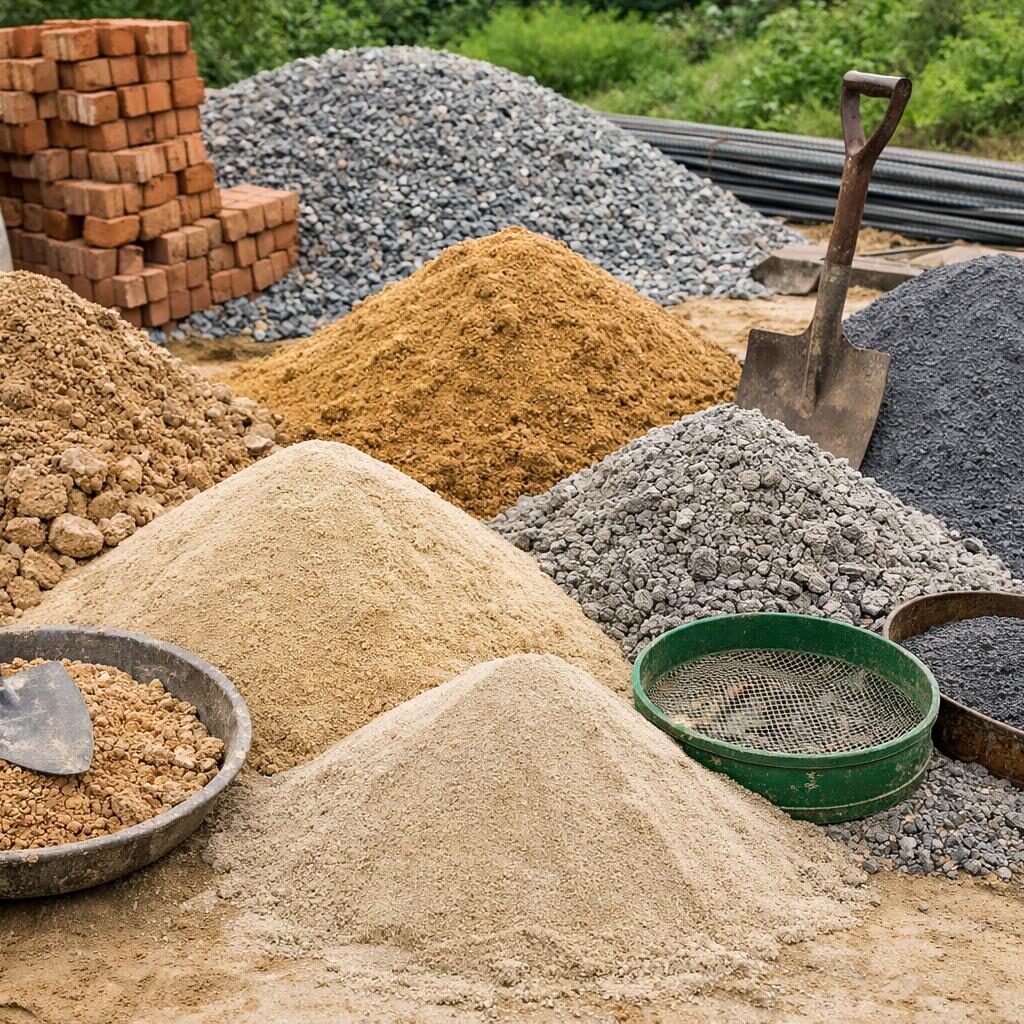
13. Construction Materials Available from Foundation to Finish
As a construction materials supplier in Mysore, we cater to requirements across multiple stages of building work. The availability of individual products should be confirmed when you enquire.
Foundation Stage
Depending on your project, foundation-related material requirements may include:
- Suitable aggregates and jelly.
- Approved fine aggregate for concrete.
- Cement.
- Specified filling materials.
- Other materials required by the structural drawings.
Foundation work should always follow the approved design and material specifications.
Structural Construction
For columns, beams, slabs, and other concrete elements, the contractor may require cement, approved fine aggregate, coarse aggregates, and other concrete materials.
The material proportions must follow the approved mix design rather than an improvised site estimate.
Brickwork and Blockwork
Masonry work generally requires the appropriate blocks or bricks, mortar materials, and any specified reinforcement or accessories.
Sand selection should match the mortar specification.
Plastering and Wall Finishing
Plastering activities may require P-Sand or other approved plastering sand, cement, and additional finishing products depending on the specified system.
Proper surface preparation and workmanship are also essential to a good finish.
Flooring and Other Finishing Work
Finishing stages may require different grades of aggregates, cement-based products, and other building materials depending on the flooring or finishing system.
Tell us which stage your project has reached so that we can discuss the materials you need.
Why Plan Material Purchases in Advance?
Purchasing materials in line with the construction schedule can help prevent unnecessary storage, handling, and delivery delays. It also allows you to confirm that the required products are available before the work begins.
14. Sand Delivery for Residential and Commercial Projects
Different projects have different supply requirements. A homeowner renovating a single room may need a smaller order, while a contractor constructing multiple floors may require repeated deliveries.
Individual Houses
House construction requires careful coordination between foundation work, masonry, plastering, and finishing. Plan sand orders according to the work scheduled and the space available for storage.
Apartments and Commercial Buildings
Larger projects may need recurring deliveries and more formal material documentation. Confirm quantities, access rules, unloading times, and material approval procedures with the site team.
Renovation and Extension Work
Renovation projects may have restricted access and limited storage space. Discuss vehicle access, unloading locations, and the required quantity before placing an order.
Contractors and Builders
Contractors may benefit from discussing their upcoming material schedule with the supplier. Share the required product, quantity, location, and preferred delivery date so that availability can be checked.
Delivery Locations Around Mysore
Customers should confirm whether their exact site location falls within the supplier’s delivery area. Delivery feasibility may depend on distance, vehicle access, quantity, and scheduling.
For an accurate quotation, provide your location rather than assuming that every order can be delivered at the same rate.
15. Common Mistakes to Avoid When Buying Sand
Mistake 1: Choosing Only by Price
The cheapest sand is not necessarily the right sand for the work. Check its suitability, quality information, quantity, and delivered cost.
Mistake 2: Ordering the Wrong Type
M-Sand, P-Sand, and concrete sand are not automatically interchangeable. Tell the supplier what the sand will be used for and follow the project specification.
Mistake 3: Ignoring Quantity Units
Tonnes, cubic metres, and vehicle loads are different ways of measuring a purchase. Confirm the unit, quantity, and basis of the quotation.
Mistake 4: Not Confirming Transport Charges
Ask whether the quoted rate includes delivery, unloading, and any other applicable charges.
Mistake 5: Ordering Without Checking Site Access
The vehicle must be able to reach the site and unload safely. Explain any access restrictions before booking delivery.
Mistake 6: Ignoring Storage Conditions
Store sand in a designated area where it will not mix with soil, rubbish, or other unwanted materials. Protect the material as appropriate for the site conditions.
Mistake 7: Changing Materials Without Approval
If a specified product is unavailable, do not make an unapproved substitution in structural or other critical work. Obtain the necessary approval first.
Mistake 8: Waiting Until the Last Minute
Material delays can disrupt labour and construction schedules. Where possible, check availability and delivery timing before the material is urgently required.
16. Frequently Asked Questions
1. Where can I order M-Sand in Mysore?
You can contact a construction materials supplier serving Mysore and request a quotation for M-Sand. Share your required quantity, intended application, and delivery location so the supplier can confirm availability and the delivered price.
2. Can I order P-Sand online in Mysore?
Yes, you can enquire about P-Sand remotely through a supplier’s website, phone, or WhatsApp service, depending on the ordering options offered. Confirm the product, quantity, price, and delivery schedule before placing your order.
3. What is the difference between M-Sand and P-Sand?
M-Sand generally means manufactured sand and is commonly used for concrete and other specified applications. P-Sand generally refers to plastering sand, selected for plastering work. Their actual grading and suitability should be confirmed with the supplier and project specification.
4. Is M-Sand suitable for concrete?
M-Sand can be used in concrete when its properties meet the applicable requirements and it is suitable for the approved mix design. Confirm the material with your engineer or concrete supplier.
5. Is P-Sand used for wall plastering?
P-Sand is commonly sold for wall plastering. The appropriate product should meet the requirements of the specified plastering mortar and finish.
6. Do you supply concrete sand in Mysore?
Customers can enquire about concrete sand and other fine aggregates. Confirm the specific product, available quantity, and suitability for your construction application when requesting a quotation.
7. Do you supply other construction materials apart from sand?
Our business caters to construction material requirements from foundation to finishing. Depending on availability, customers can enquire about cement, aggregates, jelly, and other building materials along with sand.
8. How is sand pricing calculated?
Pricing may be quoted by tonne, cubic metre, vehicle load, or another unit. The final cost can depend on material type, quantity, transport distance, availability, and additional charges. Always confirm the complete delivered quotation.
9. How do I calculate the quantity of sand required?
The calculation depends on the activity. Concrete quantity is determined using the approved mix design; plastering quantity depends on the surface area, thickness, and mortar proportions. Ask your contractor to estimate the requirement using the project’s specifications.
10. Can I order sand for a small renovation?
You can enquire about smaller quantities, subject to the supplier’s minimum order, transport arrangements, and availability. Share your location and requirement to check whether delivery is feasible.
11. Can sand be delivered directly to my construction site?
Delivery depends on the supplier’s service area, vehicle availability, order quantity, and site access. Provide the exact location and any unloading restrictions when requesting a quotation.
12. How do I check sand quality?
Check the product description, grading information, and relevant documentation where required. For structural or specification-controlled work, follow the engineer’s material approval and testing requirements.
13. Can I use the same sand for concrete and plastering?
Not necessarily. Concrete and plastering may require different grading and material characteristics. Use the product approved for each application.
14. Should I order sand and cement together?
Ordering multiple materials from one supplier may simplify planning if the products are available. Compare the total quotation and schedule deliveries according to the construction work.
15. How early should I place my order?
Contact the supplier before the material is urgently required. The ideal lead time depends on quantity, location, availability, and delivery schedules. Confirm the actual delivery date rather than assuming immediate supply.
16. Do sand rates remain the same throughout the year?
Not necessarily. Rates may change with material availability, transportation costs, demand, and other market conditions. Request a current quotation before ordering.
17. What information should I provide when requesting a quotation?
Provide the type of sand, required quantity, site location, intended use, preferred delivery date, and any relevant product specifications. Mention whether you need other construction materials as well.
18. Can I get a quotation for bulk sand orders?
You can enquire about bulk quantities and request a quotation based on your project requirements. The applicable rate and delivery arrangements should be confirmed by the supplier.
17. Quality and Construction Standards to Keep in Mind
Material selection should be guided by the requirements of the construction project, not just by common trade names.
The Bureau of Indian Standards publishes relevant standards and technical material for construction. For example, IS 383 covers aggregates for concrete, including fine aggregates and manufactured aggregate categories. The applicable edition and project requirements should be checked by the responsible engineer.
For further reference, consult these resources:
- Bureau of Indian Standards (BIS) — information about Indian standards and construction-related requirements.
- BIS: IS 383 information and documents — use the BIS catalogue or search facilities to locate the applicable edition and related documents.
- National Building Code of India — general building code guidance.
- Rank Math SEO Documentation — guidance for configuring SEO titles, meta descriptions, and focus keywords in WordPress.
These links provide additional information. They do not mean that every product supplied by a particular business has been certified or tested to a particular standard. Always verify product-specific documentation when it is required.
18. Why Choose a Construction Materials Supplier for Your Mysore Project?
When you arrange materials for a construction project, you need clear information about availability, price, quantity, quality, and delivery.
We cater to customers looking for construction materials for different building stages. Whether you need sand for plastering, fine aggregate for concrete, or other building supplies, you can enquire about your requirements and request a quotation.
Our focus is to help homeowners, contractors, builders, and construction teams plan their material purchases with clear communication and practical arrangements.
Before confirming an order, we recommend sharing the exact product specification, quantity, delivery location, and expected date. This makes it easier to check availability and provide a relevant quotation.
Add your actual business details to this section before publishing:
- Business name: [Your Business Name]
- Location: [Your Business Address, Mysore]
- Phone: [Your Business Phone Number]
- WhatsApp: [Your WhatsApp Number or Link]
- Website: [Your Website URL]
- Delivery area: [Your Confirmed Delivery Locations]
- Business hours: [Your Actual Business Hours]
Only include services, delivery locations, and claims that your business can genuinely support.
19. Order M-Sand and P-Sand Online in Mysore Today
Choosing suitable construction sand is an important part of planning a successful building project. From concrete and masonry to plastering and finishing, each application has its own material requirements.
If you are looking to order M-Sand and P-Sand online in Mysore, start by identifying the intended application, confirming the required quantity, and requesting a current quotation from a construction materials supplier.
We cater to enquiries for M-Sand, P-Sand, concrete sand, and other construction materials needed at different stages of building work, subject to availability. You can also enquire about cement, aggregates, jelly, and additional supplies for your project.
Contact MCMSINDIA.COM to discuss your requirements, check current rates, and confirm delivery arrangements for your construction site in Mysore.
Planning a new house, renovation, or commercial project? Get in touch with our team and enquire about the construction materials you need, from foundation to finish.
Call: 9686608901
WhatsApp: 9686608901
Website: https://mcmsindia.com/