




Buy Premium Solid Cement Blocks in Mysore

Buy Premium Solid Cement Blocks in Mysore – Premium Blocks
Buy Premium Solid Cement Blocks in Mysore from a dependable construction materials supplier who understands your project’s requirements. Whether you are constructing a new home, developing a commercial building, building compound walls, or managing a large construction project, choosing the right cement blocks is an important step towards creating a strong and durable structure.
We supply construction materials for projects of different sizes, from foundation work to finishing. Our aim is to make material purchasing easier for homeowners, builders, contractors, engineers, architects, and property developers across Mysore (Mysuru).
Solid cement blocks are widely used in construction because they offer a dense, sturdy masonry option for suitable applications. However, not every block is appropriate for every wall. The right choice depends on block dimensions, compressive strength, density, intended use, design requirements, and applicable construction standards. Mysore
In this guide, you will learn about the different types of solid cement blocks, their applications, important quality checks, ordering considerations, and how to choose the right blocks for your construction project in Mysore.
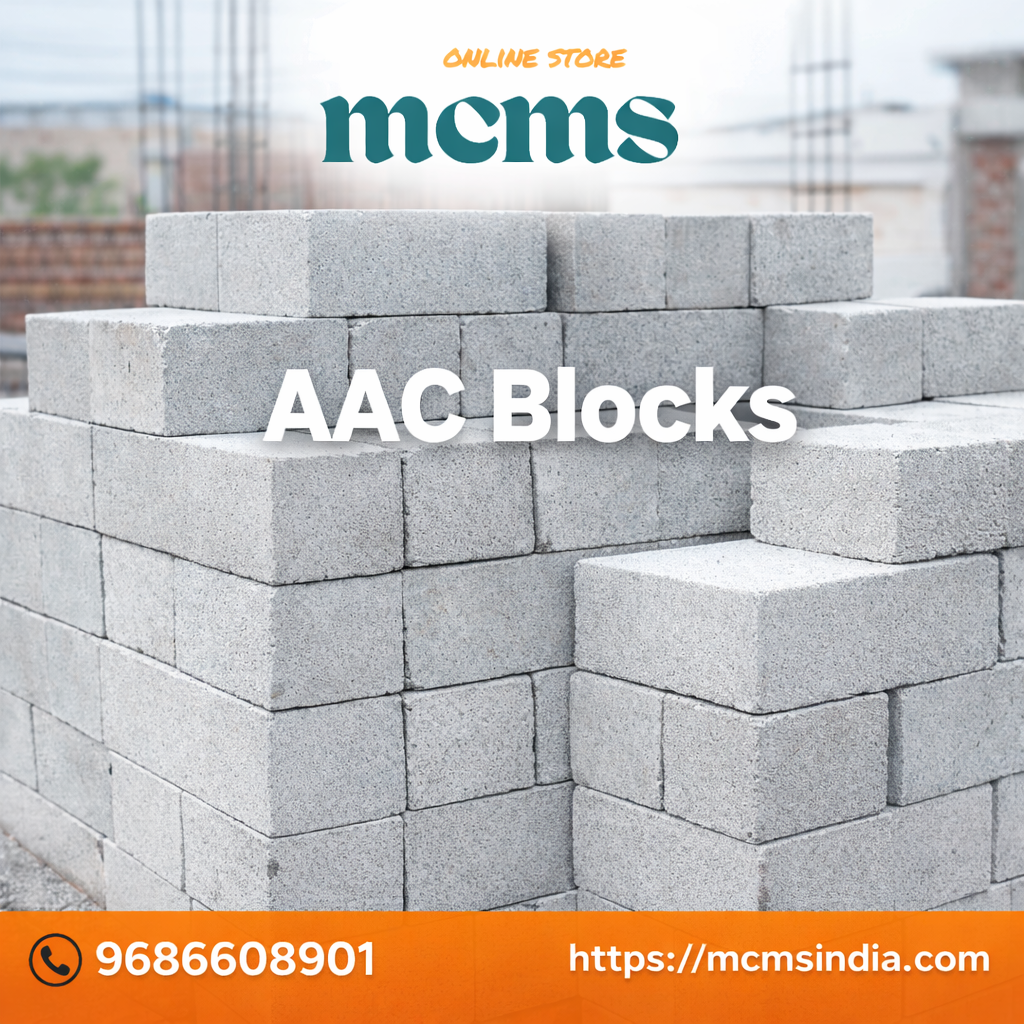
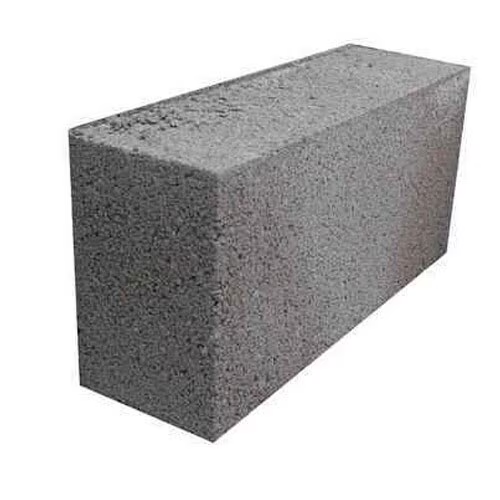
Table of Contents
- What Are Solid Cement Blocks?
- Why Choose Solid Cement Blocks for Construction?
- Types of Solid Cement Blocks We Supply
- Common Sizes and Dimensions
- Applications of Solid Concrete Blocks
- How to Choose Quality Cement Blocks
- Solid Cement Blocks Price in Mysore
- Solid Cement Blocks vs. Hollow Cement Blocks
- Why Choose a Construction Materials Supplier in Mysore?
- Delivery and Bulk Ordering
- Other Construction Materials Available
- Frequently Asked Questions
- Order Solid Cement Blocks in Mysore
1. What Are Solid Cement Blocks?
Solid cement blocks, commonly called solid concrete blocks, are masonry units manufactured using cement, aggregates, and water. The materials are mixed and moulded into specific shapes and dimensions before being cured to develop the required strength. Mysore
Unlike hollow concrete blocks, solid blocks have a substantially solid cross-section, although the precise definition and permissible voids depend on the applicable product standard.Mysore
These blocks are used for various masonry applications where their dimensions, strength, and other properties meet the project’s specifications.
Builders often consider solid blocks for walls, boundary structures, partitions, and other suitable masonry work. Their actual suitability for load-bearing construction must be established through structural design and product specifications. Mysore
When planning to buy premium solid cement blocks in Mysore, it is important to consider more than just the appearance of the blocks. Strength, dimensional accuracy, curing, consistency, transportation, and the intended application all deserve attention.
2. Why Choose Solid Cement Blocks for Construction?
Selecting suitable masonry materials can make construction easier to manage and help support the long-term performance of a building.
Here are five important benefits of using appropriate solid concrete blocks. Mysore
1. Strength and stability
Solid concrete blocks are dense masonry units that can provide good compressive strength when manufactured and tested to the required specifications. Mysore
Their suitability for a particular structure depends on the tested strength of the blocks, mortar, workmanship, wall design, and loads the structure must carry. Mysore
For load-bearing walls and other structural applications, always follow the approved structural drawings and the recommendations of your engineer.Mysore
2. Durability
Properly manufactured, cured, and installed concrete blocks can provide durable masonry when used in suitable conditions.
Durability also depends on exposure to moisture, the quality of mortar, waterproofing details, workmanship, and maintenance.
Choosing blocks that meet the project’s specifications helps reduce the risk of problems associated with unsuitable materials.
3. Suitable for various masonry applications
Solid blocks can be used in several types of construction, including selected external walls, internal masonry, compound walls, and other applications specified by the project designer. Mysore
The correct block type and thickness should be chosen according to the intended use rather than assuming that one product fits every requirement.
4. Consistent construction dimensions
Blocks manufactured with good dimensional control can help masons maintain more uniform courses and joints. Mysore
Consistent dimensions can make setting out easier and help reduce unnecessary adjustments during masonry work.
Before placing a bulk order, check the actual dimensions and tolerances of the product you intend to purchase.
5. Convenient material planning
Concrete blocks are manufactured in defined sizes, which makes it easier to estimate quantities and coordinate deliveries.
Accurate quantity planning can help reduce material shortages, excessive site storage, and avoidable handling. Mysore
Discuss your wall dimensions, openings, wastage allowance, and delivery schedule with your supplier before confirming an order.
3. Types of Solid Cement Blocks We Supply
When you plan to buy premium solid cement blocks in Mysore, start by identifying the type of block required for your project.
Solid blocks can differ in their aggregate composition, dimensions, density, manufacturing process, and specified strength. Availability may vary according to the supplier and manufacturer. Mysore
We can help customers identify suitable products from the available stock and arrange materials according to their project requirements.
A. Standard solid concrete blocks
Standard solid concrete blocks are general-purpose masonry units available in different dimensions and strength grades, depending on the manufacturer. Mysore
They may be considered for suitable wall construction, selected masonry work, and other applications where the product meets the design specifications.
Before ordering, confirm the block dimensions, strength grade, quantity, and intended use.
B. Dense aggregate solid concrete blocks
Dense aggregate concrete blocks are manufactured using suitable aggregates to produce a relatively dense concrete unit.
Depending on their tested properties, these blocks may be appropriate for applications requiring specific strength or density characteristics.
The product specification should be checked before selecting them for structural or other demanding applications.
C. Fine-finish solid concrete blocks
Some manufacturers supply solid blocks with relatively uniform surfaces and consistent dimensions.
These may be useful where a neat masonry finish is desirable or where the planned finishing system benefits from a more regular substrate.
A smoother surface does not automatically mean that a block has higher strength. Check its technical specifications separately.
D. Heavy-duty solid concrete blocks
Heavy-duty solid blocks are products specified for particular performance requirements, where available.
The term “heavy-duty” should not be treated as a standard strength classification by itself. Ask for the manufacturer’s declared strength and relevant test information.
For load-bearing or high-load applications, selection must be based on the structural design and applicable standards.
E. Different sizes of solid cement blocks
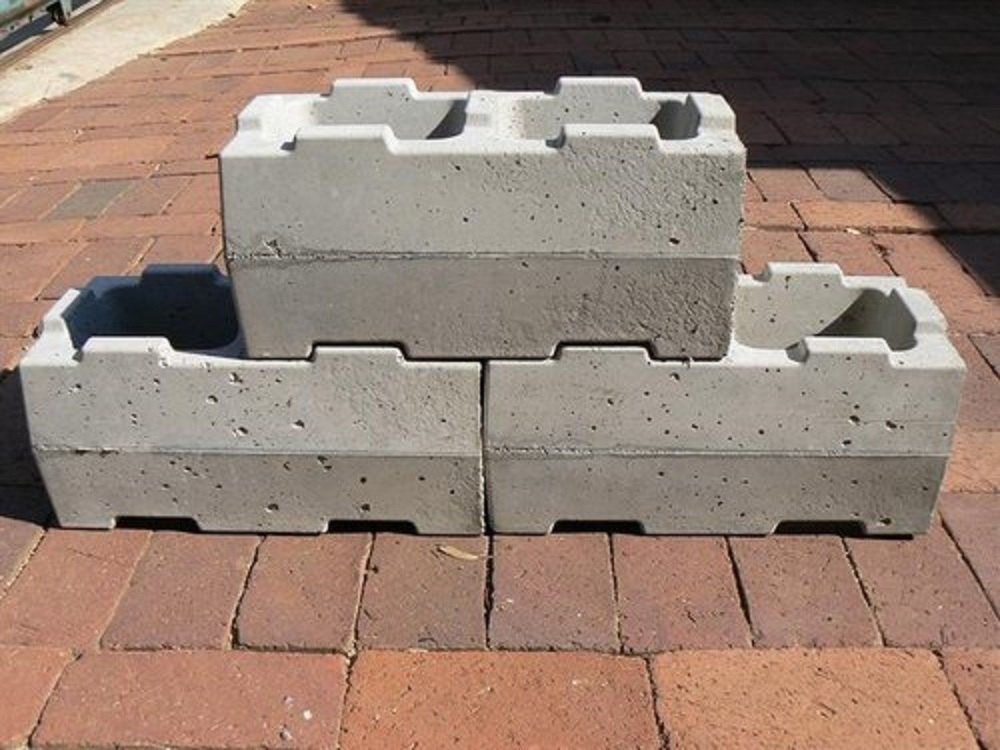
Solid concrete blocks are available in different lengths, heights, and widths, depending on the manufacturer and intended application.
For example, some product ranges include nominal dimensions around 400 mm in length and 200 mm in height, with different thicknesses. Actual dimensions, tolerances, and availability must be confirmed with the supplier.
Choosing the right thickness can affect wall layout, material quantities, and space planning. Do not select dimensions solely because they are commonly used on other projects.
F. Blocks for compound walls and boundary masonry
Solid concrete blocks may be suitable for certain compound wall and boundary masonry applications when their strength, dimensions, and design requirements match the project.
Boundary walls also require proper attention to foundations, piers, reinforcement where specified, drainage, wind loads, and overall stability.
Consult your engineer or contractor to determine the appropriate block specification.
G. Solid blocks for selected internal masonry
Solid blocks may be used for selected internal walls and partitions where their weight, thickness, acoustic requirements, and other properties are appropriate.
Consider the floor’s load capacity, service installations, fire requirements, and the overall building design before choosing a masonry system.
Need help selecting the right block? Share your project location, wall dimensions, intended application, and approximate quantity so we can help identify suitable options from the available range.
4. Common Sizes and Dimensions of Solid Cement Blocks
Block size is an important factor when estimating the number of units required for a project.
Different manufacturers produce different dimensions, so always confirm whether the measurements refer to nominal or actual block sizes.
The following table provides examples of common dimensional categories. It is not a confirmation of current stock or a claim that every size is available.
| Example block category | Typical consideration | Possible use |
|---|---|---|
| Thinner solid blocks | Lower wall thickness and space requirements | Selected internal masonry |
| Medium-width solid blocks | Balance between thickness and wall layout | Suitable general masonry |
| Wider solid blocks | Greater wall thickness and material volume | Applications specified by the designer |
| Custom or project-specific blocks | Exact dimensions and technical requirements | Projects requiring particular specifications |
When comparing products, ask for the exact length, height, width, weight if relevant, compressive strength, and applicable manufacturing standard.
How many solid blocks do you need?
To estimate the quantity, first calculate the wall area.
Wall area = Wall length × Wall height
Then subtract the area of doors, windows, and other openings. Divide the resulting net wall area by the actual wall-face area covered by one block, including the planned mortar joint where appropriate.
Finally, add a reasonable allowance for cutting, breakage, and site handling based on the project conditions.
For example, a wall measuring 10 metres long and 3 metres high has a gross area of 30 square metres before openings are deducted. The actual block quantity will depend on the block dimensions and masonry joint layout.
For complex layouts or structural masonry, ask your contractor or engineer to verify the final estimate.
5. Applications of Solid Concrete Blocks
Solid cement blocks are used in different types of construction, provided that the selected product meets the project’s requirements.
Residential construction
Homeowners and builders may use suitable solid blocks for selected external walls, internal masonry, and other specified building components.
For residential construction, it is important to coordinate the block choice with the building drawings, structural requirements, plumbing and electrical installations, and finishing plans.
Commercial buildings
Shops, offices, warehouses, and other commercial developments may require masonry units with specific strength, thickness, and performance characteristics.
Choose blocks according to the building design and relevant fire, structural, and other regulatory requirements.
Compound walls
Solid blocks may be considered for compound walls and boundary structures where the design permits their use.
Pay attention to the foundation, wall height, wind exposure, drainage, piers, and reinforcement requirements. The blocks alone do not determine the stability of the complete wall.
Renovation and extension work
Solid concrete blocks can be useful for certain renovation and extension projects.
Before adding new masonry to an existing structure, confirm the available load capacity, foundation conditions, and connection details with a qualified professional.
Selected utility and service areas
Some projects use concrete blocks for utility rooms, service areas, and other masonry applications.
The correct material depends on moisture exposure, ventilation, equipment loads, and the specific requirements of the space.
6. How to Choose Quality Solid Cement Blocks
Quality checks are important when purchasing materials for a home, commercial development, or larger construction project.
Here are practical points to discuss with your supplier.
Check dimensions and consistency
Inspect sample blocks for reasonably uniform dimensions and shape. Confirm that the manufacturer’s dimensional tolerances meet the relevant specification.
Consistent blocks help masons maintain the intended wall layout.
Ask about compressive strength
Compressive strength is an important property of concrete masonry units.
Request the applicable product grade, manufacturer’s technical details, and test documentation when required by your project.
Do not rely on appearance or weight alone to determine strength.
Look for visible defects
Inspect the blocks for significant cracks, damaged corners, excessive chipping, and obvious manufacturing defects.
Minor surface variations may occur, but serious defects should be assessed before the material is accepted.
Consider curing and manufacturing
Appropriate curing is necessary for concrete to develop its intended properties.
Ask your supplier about the manufacturer, production consistency, and quality-control practices. If your project requires testing or certification, confirm that the documentation corresponds to the product being supplied.
Verify the applicable standards
Depending on the product and intended application, relevant Indian Standards may specify requirements for concrete masonry units, testing, dimensions, and strength.
For technical reference, consult the Bureau of Indian Standards (BIS) and ask your engineer which current standard applies to your product.
Check transportation and unloading
Even good-quality blocks can be damaged by careless handling.
Discuss loading, transportation, unloading access, and site storage before dispatch. Arrange a suitable unloading area and avoid stacking blocks in a manner that creates safety risks or damages the units.
7. Solid Cement Blocks Price in Mysore
The price of solid cement blocks in Mysore can vary depending on several factors.
There is no single price that applies to every product, size, strength grade, manufacturer, or delivery location.
Factors that affect block prices
1. Block dimensions: Larger or wider blocks may use more material and have different production and handling costs.
2. Strength and specifications: Products manufactured to particular strength or quality requirements may have different prices.
3. Order quantity: Bulk orders may have different commercial terms from small orders, depending on availability and transportation.
4. Transportation distance: Delivery costs depend on the dispatch point, distance, vehicle requirements, road access, and unloading arrangements.
5. Site conditions: Difficult access, restricted delivery timings, and special unloading requirements can affect the total delivered cost.
6. Market conditions: Material and transport prices can change over time.
How to request a quotation
When requesting a quote for solid cement blocks, provide the following information:
- Required block dimensions or product specification
- Estimated quantity
- Construction site location
- Intended application
- Preferred delivery date
- Any testing or documentation requirements
Ask whether the quotation includes transportation, unloading, applicable taxes, and any other charges.
Comparing the total delivered cost is more useful than comparing the unit price alone.
Contact us for current pricing and availability. Share your project requirements so we can help you explore suitable products and delivery options.
8. Solid Cement Blocks vs. Hollow Cement Blocks
Solid and hollow concrete blocks serve different purposes. The best option depends on the design, required performance, wall thickness, and construction method.
| Feature | Solid concrete blocks | Hollow concrete blocks |
|---|---|---|
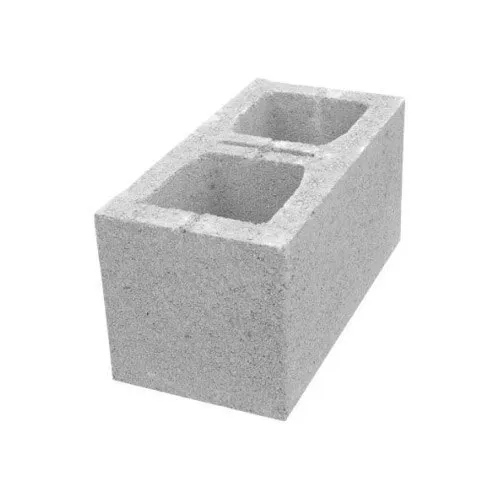
| Internal structure | Substantially solid cross-section | Contains designed cavities |
| Unit weight | Generally heavier for comparable dimensions | Generally lighter for comparable dimensions |
| Material volume | Usually greater for the same external dimensions | Reduced by the cavities |
| Handling | May require more effort because of weight | Often easier to handle, depending on size |
| Potential applications | Suitable specified masonry applications | Suitable specified masonry applications |
| Structural suitability | Must be verified against design requirements | Must be verified against design requirements |
Neither type is automatically better for every project.
Solid blocks may be appropriate when the design specifies a dense masonry unit. Hollow blocks may be suitable where the design benefits from their geometry and reduced unit weight.
Before choosing between them, discuss structural requirements, thermal performance, sound insulation, fire performance, installation details, and cost with your engineer or contractor.
9. Why Choose a Construction Materials Supplier in Mysore?
Buying materials from a supplier who understands local project requirements can make procurement more convenient.
As a construction materials supplier in Mysore, our business focuses on helping customers source materials for different stages of construction, from foundation work to finishing.
Construction materials in one place
Managing multiple suppliers can take time, particularly when a project requires materials at different stages.
Working with one supplier for several categories can simplify quotation requests, coordination, and purchasing.
Support for different project sizes
Material requirements differ between an individual home, a renovation, a commercial building, and a large development.
Sharing your project details helps us understand the type and quantity of material you need.
Product and quantity coordination
A clear material schedule helps reduce unnecessary delays caused by incomplete orders or incorrect quantities.
We encourage customers to confirm the specifications, quantities, delivery dates, and site access requirements before dispatch.
Local delivery coordination
Delivery arrangements depend on the project location, product availability, order size, and vehicle access.
Confirm the delivery area and schedule with us before placing your order.
Clear quotations
A useful quotation should identify the product, dimensions or specifications, quantity, price, delivery charges, and applicable terms.
Clear information helps customers compare options and plan their construction budgets more effectively.
10. Delivery and Bulk Ordering in Mysore
If your construction project requires a large number of solid cement blocks, advance planning can help coordinate supply with the masonry schedule.
Start by preparing an approximate quantity based on your construction drawings. Have your contractor verify the estimate before ordering.
Next, confirm the required specifications and delivery location. Check whether the site has enough space for the delivered materials and whether the vehicle can safely reach the unloading point.
For larger orders, ask about stock availability and whether deliveries can be scheduled in stages. Phased delivery may help manage storage space and avoid keeping more material on site than necessary.
Before accepting the delivery, inspect the quantity and visible condition of the blocks. Report discrepancies or significant damage promptly and follow the agreed supply terms.
To discuss bulk supply, provide your required quantity, site location, preferred delivery date, and any special specifications.
11. Other Construction Materials Available
Solid cement blocks are only one part of a construction project.
Because our business supplies materials across multiple stages of construction, you can also enquire about the other materials required for your project.
Depending on your requirements and available stock, these may include:
- Cement and other masonry materials
- Sand and aggregates
- Bricks and other walling materials
- Steel and reinforcement materials
- Foundation and structural construction supplies
- Plumbing materials
- Electrical materials
- Flooring and finishing materials
- Other general building materials
Please confirm the availability and specifications of each product before placing your order.
If you are planning an entire house or commercial project, preparing a stage-by-stage materials list can help you organise procurement and coordinate deliveries.
Explore our construction materials supply services in Mysore or visit our contact page to discuss your requirements. Replace these example links with the correct pages on your website before publishing.
12. Frequently Asked Questions
Where can I buy premium solid cement blocks in Mysore?
You can enquire with our construction materials supply business in Mysore about available solid concrete blocks, their dimensions, specifications, pricing, and delivery options. Share your project location and quantity to receive information relevant to your order.
What are solid cement blocks used for?
Solid concrete blocks are used for suitable masonry applications, including selected walls, compound walls, and other construction work. Their suitability depends on their tested properties and the approved design.
Which solid block size is best for house construction?
There is no single best size for every house. The correct dimensions depend on the wall thickness, building design, structural requirements, and manufacturer’s specifications. Confirm the required size with your contractor or engineer.
Are solid cement blocks suitable for load-bearing walls?
Some solid concrete masonry units may be suitable for load-bearing applications when their properties and the complete masonry system meet the approved structural design. Never assume that every solid block is suitable for load-bearing work.
What is the difference between solid and hollow blocks?
Solid blocks have a substantially solid cross-section, whereas hollow blocks contain designed cavities. Their weight, handling, and performance differ, so the appropriate choice depends on the project specifications.
How can I check the quality of cement blocks?
Check dimensions, visible condition, product identification, and the manufacturer’s technical specifications. Where required, ask for relevant compressive-strength test reports and other documentation.
What is the price of solid cement blocks in Mysore?
Pricing varies according to size, specification, quantity, availability, transportation, and site conditions. Request a current quotation for the exact product and delivery location.
Do you supply construction materials other than solid blocks?
Yes, our business supplies construction materials across different project stages, from foundation to finishing. Contact us to confirm the availability of the additional materials you require.
Can I order solid cement blocks in bulk?
You can enquire about bulk quantities by sharing the required specifications, quantity, project location, and delivery schedule. Availability and delivery terms must be confirmed before the order is finalised.
How should solid cement blocks be stored at the construction site?
Store blocks in an organised, stable area where they are protected from unnecessary damage and can be accessed safely. Follow appropriate handling and stacking practices, and coordinate storage with your contractor.
13. Order Solid Cement Blocks in Mysore
Choosing the right masonry materials is an important part of planning a successful construction project. Consider the required dimensions, strength, intended application, quality documentation, quantity, and delivered cost before placing your order.
If you are planning to buy premium solid cement blocks in Mysore, we can help you enquire about suitable options for your residential, commercial, or other construction requirements.
As a construction materials supplier serving different stages of building work, we aim to make material sourcing more convenient by helping customers coordinate their requirements across foundation, masonry, structural work, and finishing.
Ready to discuss your requirement?
Contact us with the following details:
- Your construction site location in or around Mysore
- Required solid block size or specifications
- Approximate quantity
- Preferred delivery date
- Any additional construction materials you need
We can then discuss product availability, current pricing, and delivery arrangements for your project.
Choose materials based on your actual construction requirements, confirm the specifications before ordering, and coordinate supply with your contractor to keep your project organised.
Enquire today about solid cement blocks and construction materials in Mysore.
We will never break your trust like others do