




MCMS Supplies Premium Quality M-Sand and P-Sand

MCMS Supplies Premium Quality M-Sand and P-Sand in Mysore
MCMS Supplies Premium Quality M-Sand and P-Sand for construction projects in Mysore, helping homeowners, builders, contractors and developers source the right sand for their building requirements. From foundation work and concrete construction to brick masonry, plastering and finishing, choosing suitable construction sand is an important step towards building a durable and well-finished property.
If you are planning to construct a new house, develop a commercial property, renovate an existing building or manage a large construction project, MCMS aims to make construction material sourcing simpler by supplying essential materials from foundation to finish.
We supply different types of construction sand, including M-Sand, P-Sand, concrete sand and other sand varieties according to project requirements and availability. Our goal is to help customers identify the appropriate material for each application and coordinate their construction material requirements through one supplier.
Whether you are a first-time homeowner or an experienced contractor, this guide explains the different types of sand used in construction, their applications, how to choose the right option and what to consider before placing an order in Mysore.
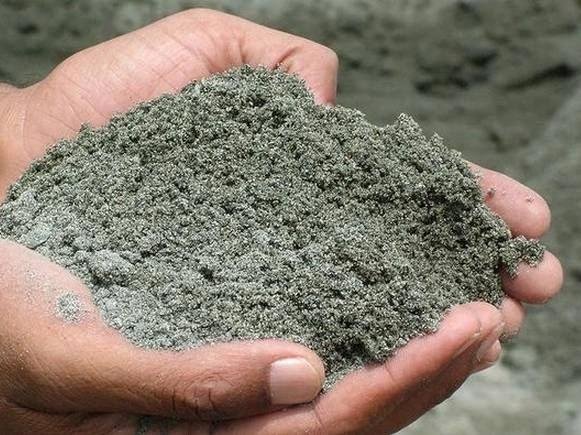
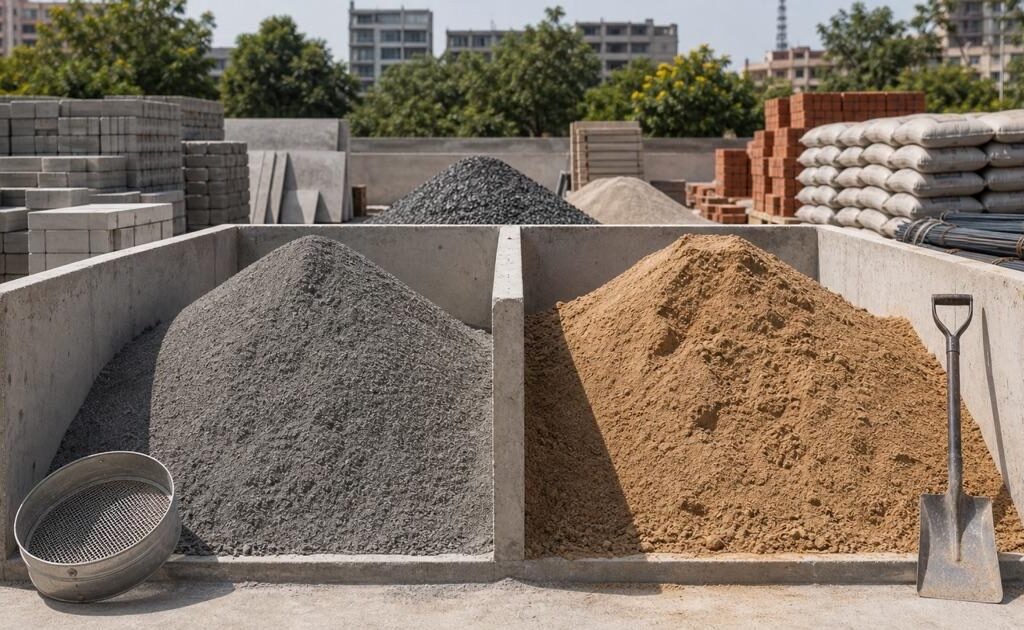
Table of Contents
- Introduction to MCMS construction material supplies
- Why choosing the right construction sand matters
- What is M-Sand?
- What is P-Sand?
- What is concrete sand?
- Other types of construction sand
- M-Sand vs P-Sand vs concrete sand
- How to choose sand for different construction stages
- Quality factors to check before buying sand
- Why source construction materials from MCMS?
- Construction materials available from foundation to finish
- Construction sand delivery in Mysore
- Tips to manage sand requirements and costs
- Frequently asked questions
- Contact MCMS for construction sand requirements
1. Introduction to MCMS Construction Material Supplies in Mysore
Building a house or commercial property requires careful planning, reliable materials and proper coordination between different stages of construction. Cement, sand, aggregates, steel, blocks and finishing materials all play important roles in completing a project successfully.
MCMS serves construction material requirements in Mysore, with a focus on helping customers source essential building materials from a single supplier wherever possible. Instead of searching separately for every item, customers can discuss their material requirements, project stage, delivery location and estimated quantity with our team.
Sand is one of the most frequently used materials on a construction site. It is required for various applications, including concrete production, plastering, masonry and other building work. However, not every type of sand is suitable for every application.
For example, sand selected for concrete work may have different grading requirements from sand used to achieve a smooth plaster finish. Understanding these differences can help customers communicate more clearly with their contractors and reduce avoidable material selection mistakes.
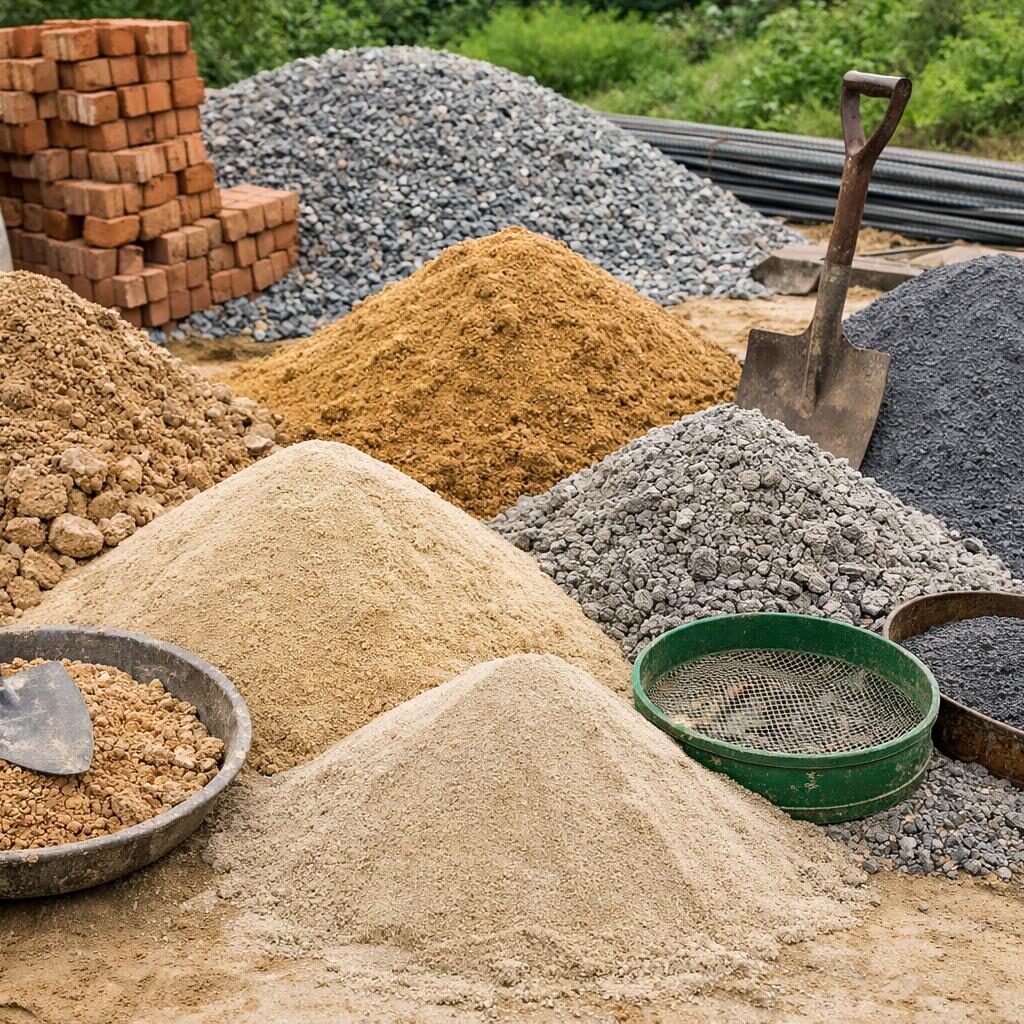

At MCMS, we help customers explore suitable sand options for their projects, including:
- M-Sand for suitable concrete applications.
- P-Sand for plastering and finishing work.
- Concrete sand for applications requiring appropriate concrete-grade fine aggregate.
- Other available construction sand varieties for specific project needs.
The final selection should always be based on the intended use, material specifications and advice from the project’s engineer or contractor.
2. Why Choosing the Right Construction Sand Matters
Sand may look like a simple building material, but its characteristics can influence the workability, finish and performance of mortar and concrete.
The suitability of sand depends on several factors, such as particle-size distribution, cleanliness, particle shape, moisture content and the presence of unwanted materials. The appropriate requirements also depend on the construction application.
2.1 Sand and concrete quality
Concrete commonly consists of cement, water, fine aggregate, coarse aggregate and, where specified, admixtures. Fine aggregate fills spaces between larger particles and contributes to the overall characteristics of the concrete mix.
Using sand that does not meet the required grading or cleanliness criteria can affect workability and mix performance. The correct material should therefore be selected according to the concrete mix design and applicable specifications.
2.2 Sand and plastering finish
Plastering requires sand suitable for producing a consistent mortar and the intended surface finish. The particle size, grading and cleanliness of the sand can influence how easily the mortar can be applied and finished.
Using a suitable plastering sand can help workers achieve a more uniform surface when the mortar proportions, preparation and application are also correct.
2.3 Sand and masonry work
Sand is used in mortar for laying bricks and blocks. Suitable sand helps the mortar achieve the intended consistency and supports proper application between masonry units.
The correct selection depends on the masonry system, mortar specification and project requirements.
2.4 Sand and construction costs
Buying the cheapest available sand may not always be the most economical choice. Material that is unsuitable for the intended application can contribute to wastage, inconsistent workmanship or additional corrective work.
A better purchasing decision considers material suitability, quantity, transport charges, unloading arrangements and delivery timing together.
3. What Is M-Sand?
M-Sand stands for manufactured sand. It is produced by mechanically crushing suitable rock or stone and processing the resulting material into sand-sized particles.
Manufactured sand is used as an alternative to natural sand in appropriate construction applications. Its suitability depends on the source material, manufacturing process, grading and compliance with the relevant specifications.
MCMS supplies M-Sand for customers in Mysore who require construction sand for suitable building applications, subject to product availability and project requirements.
3.1 Common uses of M-Sand
M-Sand can be considered for applications such as:
- Concrete production when the material meets the specified requirements.
- Reinforced concrete work when approved for the relevant mix design.
- Certain masonry and mortar applications.
- General building work where the specified grade is suitable.
- Other approved construction applications based on technical requirements.
Not all M-Sand is identical. The material should be selected according to its intended use rather than assuming that every manufactured sand product is suitable for every construction activity.
3.2 Benefits of manufactured sand
Consistent processing: Manufactured sand is produced through a controlled crushing and screening process. This can help producers manage particle grading, depending on the equipment and quality-control practices used.
Availability: Manufactured sand can provide an alternative source of fine aggregate where suitable natural sand is limited or unsuitable.
Application-specific grading: Processing can be adjusted to produce material for particular applications, subject to the manufacturer’s capabilities and quality controls.
Potential resource benefits: Manufactured sand may reduce dependence on natural river sand in appropriate circumstances. Its overall environmental impact still depends on quarrying, processing, energy use, water use and transportation.
3.3 What should buyers check before purchasing M-Sand?
Before placing an order, ask about the intended application and confirm that the material meets the relevant grading and quality requirements.
For structural concrete, the selection should follow the engineer’s specifications, approved mix design and applicable standards. If testing documentation is required, confirm its availability before ordering.
Customers should also check the delivered quantity, transport arrangements and unloading requirements.
3.4 Is M-Sand suitable for house construction?
M-Sand can be suitable for various house construction applications when it meets the requirements for the intended use.
However, choosing a suitable product is only one part of building a durable house. Correct mix proportions, good workmanship, proper curing and compliance with engineering specifications remain essential.
4. What Is P-Sand?
P-Sand generally refers to plastering sand, a sand product intended for plastering and related finishing applications. Its exact particle grading and specifications can vary between suppliers, so buyers should confirm the product grade before ordering.
MCMS supplies P-Sand for plastering requirements in Mysore, subject to availability and the specifications required for the project.
4.1 Common uses of P-Sand
Plastering sand is commonly considered for:
- Internal wall plastering.
- External wall plastering when suitable for the specified system.
- Selected finishing mortar applications.
- Surface preparation and other approved uses requiring suitable fine sand.
The exact suitability depends on the product’s grading, cleanliness and the plaster specification.
4.2 Why is suitable plastering sand important?
Plastering creates a protective and decorative surface over masonry or concrete. The quality of the finished surface depends on several factors, including the sand, cement or other binder, water proportions, substrate preparation, workmanship and curing.
Suitable sand can help workers prepare a workable mortar and achieve the desired finish.
Poorly graded or contaminated material may make finishing more difficult. Excessive or unsuitable fine particles can also influence water demand and mortar behaviour.
4.3 How to select P-Sand for your project
When ordering plastering sand, consider the following:
- Type of plastering: Confirm whether the work involves internal walls, external walls or another finishing application.
- Required finish: Discuss the intended surface texture and plaster thickness with your contractor.
- Material cleanliness: Check that the material is free from unwanted debris and excessive contamination.
- Grading requirements: Confirm that the sand is suitable for the plaster specification.
- Quantity and delivery: Estimate the required volume and arrange delivery according to the construction schedule.
4.4 P-Sand for new homes and renovation projects
P-Sand may be required during the finishing stage of a new house and during renovation work involving damaged or uneven plaster.
For renovation projects, the existing surface must also be inspected and prepared properly. Simply using a suitable sand will not correct structural movement, persistent moisture problems or poorly prepared substrates.
5. What Is Concrete Sand?
Concrete sand is a general trade term for sand intended for use in concrete mixtures. The name alone does not establish its suitability: the product must meet the grading and quality requirements of the intended concrete application.
Concrete sand contributes to the fine aggregate portion of a concrete mix. Together with cement, water and coarse aggregate, it helps form the mixture used for foundations, slabs, columns, beams and other concrete elements when specified by the project engineer.
5.1 Common applications of concrete sand
Depending on the material specifications, concrete sand may be used for:
- Concrete for suitable foundation elements.
- Reinforced concrete work.
- Slabs and other structural elements.
- Concrete pathways and selected external works.
- Other applications where the specified mix design permits the material.
These examples do not mean that one product can be used for every concrete grade. Structural work must follow the approved mix design and project specifications.
5.2 What makes sand suitable for concrete?
Several characteristics are important when selecting fine aggregate for concrete.
Grading: Particle sizes should fall within the specified grading limits. Grading influences how particles pack together and can affect the workability and proportions of the mix.
Cleanliness: Excessive clay, organic matter or other harmful contaminants may affect the properties of concrete or mortar.
Particle characteristics: Shape, texture and other properties can influence the behaviour of the fresh mix and its performance.
Moisture content: The amount of water present in damp sand can affect the effective water content of a concrete mix. Site teams should account for moisture as required by the mix design.
5.3 Why the mix design matters
A concrete mix is not selected simply by choosing sand and adding a convenient quantity of cement and water. Structural concrete should be proportioned according to the required grade, exposure conditions, workability and applicable engineering requirements.
The correct fine aggregate is part of that process. Customers should communicate the concrete application to their supplier and confirm the product specification with their engineer or contractor.
6. Other Types of Construction Sand
Different construction activities may require different types or grades of sand. Apart from M-Sand, P-Sand and concrete sand, the following terms may be relevant when discussing construction material requirements with a supplier.
Availability depends on the supplier, source, local market and project specifications. Ask MCMS to confirm which varieties are available for your delivery location.
6.1 River sand
River sand is naturally occurring sand collected from permitted sources. Its properties depend on the source and processing.
It has traditionally been used for mortar, concrete and other construction applications. However, it should not be assumed that all river sand is suitable for every use.
Buyers should check the legality of sourcing, material cleanliness, grading and suitability for the intended application. Natural sand extraction can also create environmental concerns if not properly regulated.
6.2 Crushed sand
Crushed sand is produced by crushing suitable stone or gravel and processing the material into smaller particles.
The term can cover products with different particle characteristics and grading. The intended use and applicable specifications determine whether a particular crushed sand product is suitable.
6.3 Manufactured fine aggregate
Manufactured fine aggregate is a broader technical category that includes fine aggregate produced through manufacturing processes. M-Sand is a commonly used market term for manufactured sand made from crushed rock.
Buyers should distinguish between a product’s trade name and its verified technical properties.
6.4 Masonry sand
Masonry sand is a general product category used for certain mortar and masonry applications. The required grading and cleanliness depend on the type of mortar and the relevant specifications.
Before purchasing masonry sand, confirm whether the product is intended for brickwork, blockwork or another application.
6.5 Plastering sand
Plastering sand is selected for plaster mortar and finishing work. P-Sand is a common trade abbreviation for plastering sand, although naming conventions may vary between suppliers.
The material should provide suitable grading and cleanliness for the required plaster finish.
6.6 Filling sand
Filling sand may be used for certain filling and levelling activities when appropriate for the project. It should not automatically be treated as a replacement for engineered fill, selected granular material or a specified sub-base.
The type of fill, compaction requirements, drainage conditions and structural considerations should be confirmed with the responsible professional.
6.7 Bedding sand
Bedding sand may be used beneath selected paving systems or other installations where the design calls for it. The correct grading and thickness depend on the paving product and installation method.
Do not substitute ordinary sand for a specified bedding material without approval.
6.8 Fine aggregate for mortar
Mortar sand is used in cement mortar or other specified mortar mixtures. The product should be suitable for the type of masonry or finishing work being carried out.
Its grading, cleanliness and moisture condition influence the preparation and application of the mortar.
6.9 Specialty sand products
Some projects require specialty sands or engineered granular materials with particular grading or performance requirements.
For these applications, the product should be identified by its actual specification rather than relying only on a generic trade name. Customers should share the project specification with MCMS so that availability and suitability can be checked.
7. M-Sand vs P-Sand vs Concrete Sand
Although all three products are described as sand, their intended applications may differ.
| Feature | M-Sand | P-Sand | Concrete sand |
|---|---|---|---|
| General meaning | Manufactured sand, often produced from crushed rock | Commonly refers to plastering sand | Sand intended for concrete applications |
| Typical use | Suitable concrete and other approved applications | Plastering and finishing mortar | Concrete mixtures where the product meets specifications |
| Main consideration | Grading, cleanliness and suitability for the mix | Finish requirements, grading and cleanliness | Compliance with concrete specifications and mix design |
| Can products be interchangeable? | Only where specifications permit | Not automatically suitable for structural concrete | Not automatically suitable for every plastering application |
| What to confirm | Intended application and technical requirements | Required plaster grade and finish | Approved concrete mix and aggregate requirements |
Which sand should you choose?
For structural concrete, follow the engineer’s specified fine aggregate and mix design. For plastering, select sand suitable for the required plaster finish. For masonry or filling, identify the relevant application and verify the product requirements.
The correct choice is the sand that meets the technical requirements of the job, not necessarily the product with the most familiar name.
8. How to Choose Sand for Different Construction Stages
A construction project progresses through several stages, and the material requirements can change at each stage.
8.1 Foundation and footing work
Foundation construction may involve excavation, selected filling, plain cement concrete and reinforced concrete, depending on the building design.
Different activities can require different materials. Sand intended for concrete should meet the approved specifications, while filling materials must meet the requirements of the relevant earthwork or foundation detail.
Always follow the structural drawings and instructions from the project engineer.
8.2 Column, beam and slab construction
Columns, beams and slabs commonly use reinforced concrete. The fine aggregate used in these elements should be suitable for the approved concrete mix.
Discuss the grade of concrete, required quantity and delivery schedule with the contractor before ordering.
8.3 Brickwork and blockwork
Brick and block masonry generally require mortar suited to the units, wall system and project specification.
Choose suitable mortar sand and avoid using material that contains excessive unwanted impurities or does not meet the required grading.
8.4 Internal plastering
Internal plastering requires material appropriate for the specified mortar and finish. The substrate should be prepared properly, and the mortar should be applied and cured according to the relevant construction practice.
P-Sand may be considered where it meets these requirements.
8.5 External plastering
External walls are exposed to weather and moisture, making correct material selection and workmanship particularly important.
Use the specified plaster system and confirm that the sand is suitable for the application. Proper surface preparation, detailing and curing are also essential.
8.6 Flooring and paving preparation
Flooring, paving and related work can involve bedding, levelling or mortar materials with specific requirements.
Ask the contractor to identify the required product instead of assuming that concrete sand or plastering sand will work for every application.
8.7 Renovation and repair
Repair work may require small, carefully planned quantities of sand for mortar, plaster patches or other approved applications.
Before ordering, establish the type of repair, the required material and the approximate quantity. Structural cracks or recurring dampness should be assessed before surface repairs are carried out.
9. Quality Factors to Check Before Buying Construction Sand
Good material selection starts with knowing what to check.
9.1 Particle-size distribution
Sand should have grading appropriate for its intended use. Different applications may require different grading characteristics.
Where required, use test results or product documentation to verify that the material meets the specified limits.
9.2 Cleanliness and unwanted material
Sand should be checked for excessive clay, organic material, debris and other harmful contaminants. The acceptable limits depend on the applicable standard and application.
Visual inspection is useful but cannot replace laboratory testing where technical compliance must be demonstrated.
9.3 Moisture condition
Sand may be delivered dry, damp or wet depending on storage and weather conditions. Moisture can influence batching and quantity calculations.
For concrete production, the responsible site team should account for moisture in accordance with the mix design and relevant procedures.
9.4 Consistency between deliveries
For larger projects, consistency matters because repeated deliveries form part of the same construction process.
Customers may request details of the product source, grading and available quality documentation before arranging ongoing supply.
9.5 Compliance with relevant standards
For fine aggregate used in concrete, IS 383:2016 is an important Indian Standard covering coarse and fine aggregates for concrete, including relevant requirements for fine aggregate.
Read the official Bureau of Indian Standards references listed below and consult the engineer responsible for your project when confirming compliance.
A supplier should not claim that a product is certified, tested or compliant unless the relevant evidence is available for that product.
10. Why Source Construction Materials from MCMS?
Construction projects involve more than purchasing a single product. Builders need to coordinate quantities, delivery times, material specifications and the sequence of work.
MCMS aims to support customers in Mysore by helping them source essential construction materials for different stages of a project.
10.1 Multiple construction material requirements
If you need M-Sand, P-Sand, concrete sand or other building materials, you can discuss your requirements together rather than planning each purchase in isolation.
The actual products available should be confirmed with the MCMS team.
10.2 Support for homeowners and contractors
Homeowners may need guidance when comparing material names and understanding what to order. Contractors may need to coordinate repeated deliveries according to their site schedule.
Sharing the project details and required application helps the supplier identify the appropriate product category.
10.3 Supply planning for different project sizes
Material requirements can vary significantly between a small renovation, an individual house and a commercial construction project.
Confirm the quantity, delivery location, vehicle access, unloading arrangements and schedule before placing an order.
10.4 A practical approach to purchasing
A clear material order should identify the product, intended use, quantity, delivery location and expected delivery date.
If the project requires a specific grade or test documentation, include those details in the enquiry. This helps avoid confusion between different types of construction sand.
10.5 Materials from foundation to finish
MCMS supplies construction materials for different project stages, subject to the current product range and availability.
Customers can discuss sand, aggregates, cement, steel, masonry materials and finishing requirements with the team to confirm which products can be supplied for their project.
11. Construction Materials Available from Foundation to Finish
Sand is only one component of a building project. Depending on your requirements, you may also need the following categories of construction materials.
11.1 Cement
Cement is used in concrete, mortar and other construction applications. The appropriate type and grade depend on the design and application.
Always follow the project specification and the manufacturer’s handling and storage guidance.
11.2 Steel and reinforcement materials
Reinforcement steel is used in reinforced concrete elements according to structural drawings and bar-bending schedules.
The size, grade, quantity and placement of reinforcement must follow the engineer’s design. Do not select reinforcement solely on price or availability.
11.3 Aggregates and jelly
Coarse aggregates are used in concrete and selected construction works. The required nominal size and grading depend on the application and concrete specification.
Check the product size and source before ordering.
11.4 Bricks and blocks
Bricks and blocks are used for walls and partitions, depending on the building system.
Their dimensions, strength, installation method and compatible mortar should be considered when estimating material requirements.
11.5 Other building and finishing materials
Construction projects may also require waterproofing products, tiles, plumbing supplies, electrical materials, paints and other finishing items.
Confirm the availability of each item with MCMS rather than assuming every product is stocked at all times.
11.6 Coordinating material deliveries
A delivery schedule should reflect the sequence of construction activities and the space available at the site.
Ordering too much material at once can create storage difficulties, while delayed deliveries can interrupt work. Coordinate quantities and delivery dates with the site supervisor.
12. Construction Sand Delivery in Mysore
When ordering sand in Mysore, buyers should consider the delivery location, access roads, unloading space and timing of the construction activity.
A delivery arrangement that works for an open site may not work for a narrow residential lane or a property with restricted vehicle access.
Before confirming an order, provide the supplier with the following information:
- The type of sand required.
- The intended construction application.
- The estimated quantity.
- The complete delivery location.
- Preferred delivery date and time.
- Vehicle access or unloading restrictions.
- Any specified grading or quality documentation.
For ongoing construction, discuss whether deliveries should be arranged in stages. This can help match material supply with site storage capacity and work progress.
If you are comparing suppliers, request a clear quotation that identifies the product, quantity, transport charges and other applicable costs. Confirm the final amount and delivery conditions before placing your order.
13. Tips to Manage Sand Requirements and Costs
Planning sand purchases carefully can help construction teams control avoidable expenses.
13.1 Estimate the quantity before ordering
Use the dimensions of the work and the relevant construction specification to estimate material requirements.
For plastering, the wall area, specified thickness and expected wastage affect the quantity. For concrete, the quantity depends on the mix design and volume of the concrete element.
Ask your contractor or quantity surveyor to verify the estimate before placing a bulk order.
13.2 Compare delivered prices
A low quoted price may not include transport, unloading or other charges.
Compare quotations on a consistent basis and clarify the quantity unit, delivery conditions and applicable taxes.
13.3 Avoid mixing up product names
M-Sand, P-Sand and concrete sand may be described differently by different suppliers. Ask what the product is intended for and what specifications it meets.
Do not order solely by a trade name when the engineer has specified a particular material.
13.4 Store sand appropriately
Where practical, keep sand in a designated area that reduces contamination from soil, debris and other materials.
Manage surface runoff and site drainage so that stored material does not become mixed with unwanted substances.
13.5 Plan deliveries around construction progress
Coordinate sand deliveries with the actual work schedule. Consider site access, storage capacity and the expected rate of consumption.
For large projects, a planned delivery schedule may be more practical than receiving the entire estimated quantity at once.
13.6 Ask questions before confirming an order
If the sand type, grading or application is unclear, confirm the details before delivery. A short discussion at the purchasing stage can help prevent a mismatch between the ordered material and the project’s requirements.
14. Frequently Asked Questions About M-Sand and P-Sand in Mysore
What is the difference between M-Sand and P-Sand?
M-Sand generally refers to manufactured sand, commonly produced from crushed rock. P-Sand generally refers to plastering sand. Their intended uses and grading may differ, so buyers should select the product that meets the project’s requirements.
Does MCMS supply M-Sand in Mysore?
MCMS offers construction material supply services in Mysore. Contact the team to confirm current M-Sand availability, product specifications, quantity and delivery arrangements.
Can M-Sand be used for house construction?
M-Sand can be used for suitable house construction applications when it meets the relevant specifications. For structural concrete, follow the approved mix design and the engineer’s requirements.
What is P-Sand used for?
P-Sand is commonly associated with plastering and finishing mortar. Its suitability depends on grading, cleanliness and the plaster system being used.
What is concrete sand used for?
Concrete sand is intended for use as fine aggregate in suitable concrete mixtures. Confirm that the product meets the required specification and is permitted by the approved mix design.
Can the same sand be used for concrete and plastering?
Not necessarily. Concrete and plastering can have different material requirements. A product should only be used for both applications when it meets the specifications for each.
Which sand is best for plastering?
The best option is sand that meets the grading and cleanliness requirements of the specified plaster mortar and provides the required finish. Confirm the product with your contractor or project engineer.
How can I check the quality of construction sand?
Start by checking the product’s intended application, visible cleanliness and available specifications. Where compliance matters, request suitable test documentation or arrange testing through an appropriate laboratory.
Is manufactured sand an alternative to river sand?
Manufactured sand can serve as an alternative to natural sand in appropriate applications when it meets the relevant requirements. Suitability depends on the product and the project specification.
Does MCMS supply other construction materials?
MCMS supplies construction materials for different stages of building projects. Contact the team to confirm the current product range and availability of cement, aggregates, steel, masonry materials and other items.
How do I request a sand quotation in Mysore?
Share the sand type, intended application, estimated quantity, delivery location and preferred date with MCMS. Ask for a quotation that clarifies product details, transport charges and delivery conditions.
How much sand is needed to build a house?
The required quantity depends on the building’s size, design, construction method, concrete volume, masonry area and plastering specifications. A contractor or quantity surveyor can estimate the requirement from the project drawings and measurements.
15. Contact MCMS for Construction Sand Requirements in Mysore
Planning a new house, commercial building or renovation project? Choosing suitable construction sand is an important part of preparing for the work.
MCMS Supplies Premium Quality M-Sand and P-Sand for customers looking to source construction sand in Mysore. We also help customers explore other construction material requirements for different stages of their projects, subject to availability.
Whether you require M-Sand for an approved concrete application, P-Sand for plastering, concrete sand or another specified material, share your requirements with our team.
When contacting MCMS, please provide:
- Your required sand type.
- Estimated quantity.
- Construction application.
- Delivery location in Mysore or the surrounding service area.
- Preferred delivery date.
- Any project-specific grading or quality requirements.
This information helps us understand your requirement and confirm product availability and delivery arrangements.
Choose the right construction material for the right application. Contact MCMS to discuss your sand and building material requirements in Mysore.
MCMS supplies construction materials for projects from foundation to finish. Product availability, delivery coverage and specifications should be confirmed with the team before ordering.
We will never break your trust like others do