




Best Aggregates for Concrete and Construction

Best Aggregates for Concrete and Construction in Mysore – Premium Materials
Best Aggregates for Concrete and Construction are essential for producing strong, durable and reliable concrete for residential, commercial and infrastructure projects. Whether you are constructing a house, apartment, commercial building, compound wall, road, foundation or other civil structure in Mysore, choosing the right aggregate is an important part of getting the required quality from your concrete and construction work.
As a leading construction materials supplier in Mysore, we supply a wide range of construction materials required from foundation to finishing. Our aggregate range includes different sizes and types of coarse aggregates, fine aggregates, crushed stone materials and other construction aggregates suitable for different building and civil works.
In this guide, we explain the commonly used aggregates, their applications, how to select them, and what you should consider when purchasing aggregates for a construction project in Mysore.
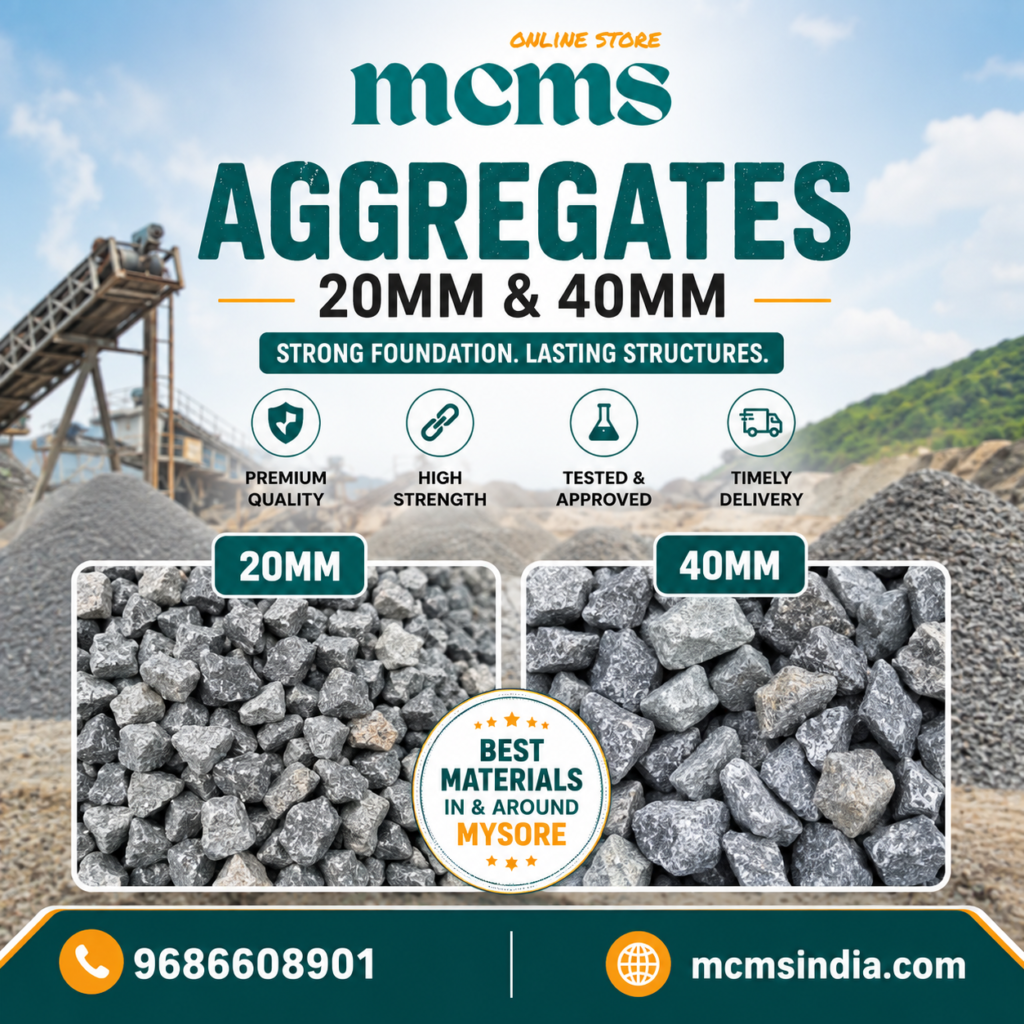
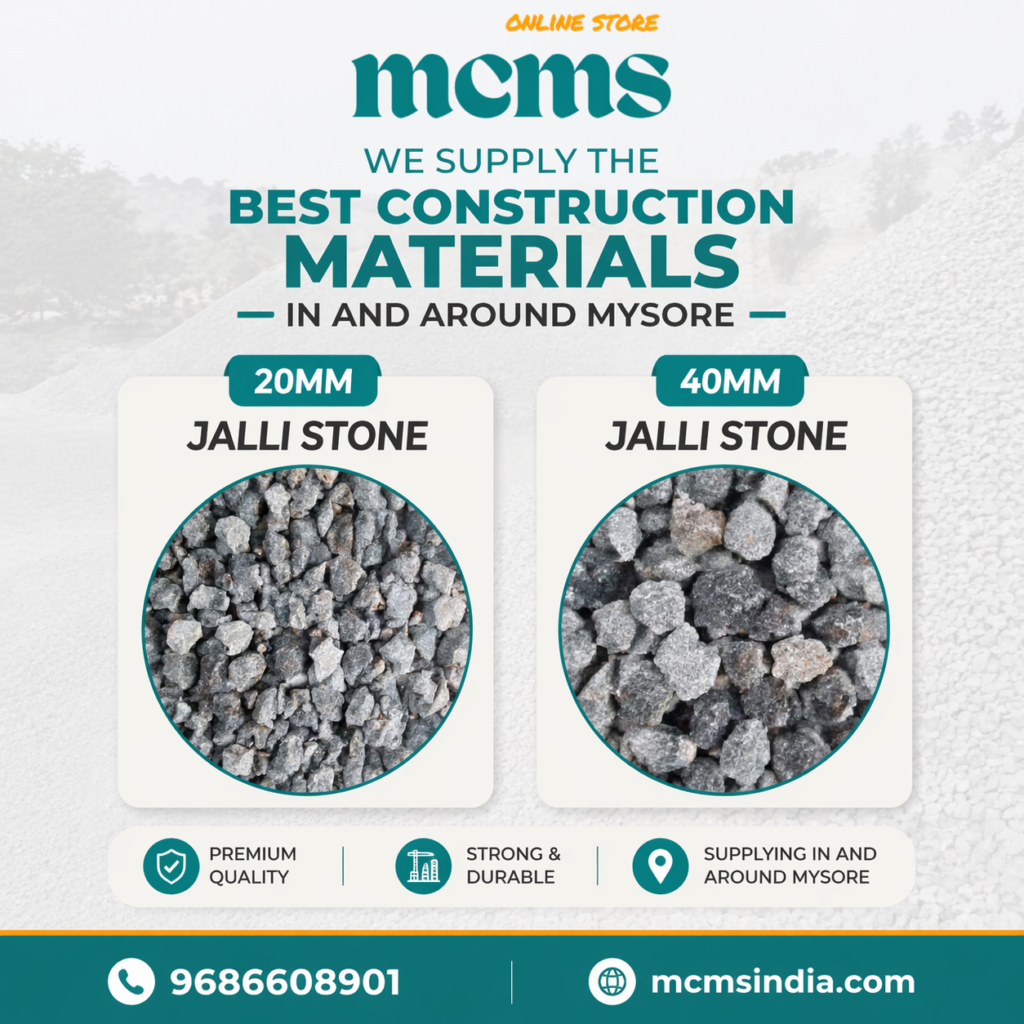
Table of Contents
- What Are Aggregates?
- Why Aggregates Are Important in Construction
- Best Aggregates for Concrete and Construction
- Types of Aggregates We Supply in Mysore
- 10mm Aggregate
- 20mm Aggregate
- 40mm Aggregate
- 6mm Aggregate and Stone Chips
- Fine Aggregate and Manufactured Sand
- Stone Dust and Crusher Dust
- Jelly and Crushed Stone Aggregates
- Aggregates for Different Construction Applications
- How to Choose the Right Aggregate
- Important Aggregate Quality Factors
- Aggregates and Indian Standards
- Buying Aggregates in Mysore
- Why Proper Aggregate Selection Matters
- Frequently Asked Questions
- Conclusion
What Are Aggregates?
Aggregates are granular construction materials that are mixed with cement, water and other ingredients to produce concrete, mortar and other building materials.
They make up a major portion of concrete and have a significant influence on properties such as strength, workability, durability and dimensional stability.
Aggregates can generally be divided into two broad categories:
- Fine aggregates
- Coarse aggregates
Fine aggregates are smaller particles, commonly used along with cement and coarse aggregate to create a workable concrete mixture. Coarse aggregates are larger particles used to provide volume, strength and stability to concrete.
The Bureau of Indian Standards identifies coarse and fine aggregates for concrete under IS 383:2016, which covers aggregates from natural sources as well as certain manufactured sources.
Why Aggregates Are Important in Construction
Aggregates are much more than simply filling material.
When properly selected and proportioned, they contribute significantly to the performance of concrete. The size, shape, grading, cleanliness, strength and other characteristics of aggregates can affect the finished concrete.
Good-quality aggregates can help with:
- Concrete strength
- Concrete durability
- Workability
- Stability
- Reduced shrinkage
- Efficient use of cement
- Proper concrete finishing
- Better performance of foundations and structural elements
For this reason, contractors, builders, engineers and homeowners should select aggregates according to the application rather than simply choosing the cheapest available material.
Best Aggregates for Concrete and Construction
There is no single aggregate that is suitable for every construction activity.
The Best Aggregates for Concrete and Construction depend on what you are building and how the material will be used.
For example, aggregate suitable for an RCC slab may not be the same material selected for a large mass-concrete application, road base, drainage work or masonry-related work.
Some of the commonly supplied aggregates for construction include:
- 6mm aggregate
- 10mm aggregate
- 12mm aggregate
- 20mm aggregate
- 40mm aggregate
- Crushed stone aggregate
- Stone chips
- Jelly
- Fine aggregate
- Manufactured sand
- Stone dust
- Crusher dust
- Mixed or graded aggregate
- Other aggregate sizes based on project requirements
The exact material required should be selected according to the concrete mix design, drawings, specifications and recommendations of the project engineer.
Types of Aggregates We Supply in Mysore
As a construction materials supplier in Mysore, we understand that different projects require different materials.
Our aggregate supply is intended to support construction requirements from foundation work to finishing and external development.
10mm Aggregate
10mm aggregate is a commonly used smaller-size coarse aggregate.
It can be useful in applications where smaller aggregate particles are required for concrete placement and proper distribution.
Depending on the approved mix design and project requirements, it may be used for:
- RCC work
- Slabs
- Beams
- Columns
- Small concrete components
- Precast applications
- Other concrete works
The suitability of 10mm aggregate should always be checked against the concrete mix specification rather than assuming that one aggregate size works for every project.
20mm Aggregate
20mm aggregate is one of the commonly used coarse aggregate sizes in general concrete construction.
It is frequently associated with RCC and other structural concrete applications where the mix design specifies this nominal aggregate size.
20mm aggregate may be used in:
- Residential construction
- RCC slabs
- Beams
- Columns
- Footings
- Foundations
- Concrete floors
- Commercial building projects
The appropriate aggregate size depends on factors such as member dimensions, reinforcement spacing, placement method and the approved mix design.
40mm Aggregate
40mm aggregate is a larger coarse aggregate.
It can be suitable for applications where larger aggregate is permitted by the project specification and concrete design.
Potential applications include:
- Mass concrete
- Large foundations
- Heavy concrete works
- Certain road and civil works
- Non-reinforced concrete applications where specified
- Other large-volume concrete works
However, larger aggregate should not automatically be substituted for smaller aggregate. The engineer or concrete mix designer should determine the suitable nominal maximum aggregate size for the application.
6mm Aggregate and Stone Chips
Smaller stone aggregates and stone chips are useful for specific construction and finishing requirements.
Their application depends on grading, material properties and the intended work.
They may be used in:
- Certain concrete applications
- Paver-related work
- Surface works
- Landscaping
- Drainage-related applications
- Other civil construction requirements
If you are unsure which size you require, provide us with your project details and the required quantity so that the appropriate material can be identified.
Fine Aggregate and Manufactured Sand
Fine aggregate plays an important role in concrete and mortar.
Fine aggregate fills the spaces between larger particles and contributes to the overall workability and grading of a concrete mixture.
Depending on availability, project specifications and intended use, fine aggregate may include natural sand, crushed sand or manufactured fine aggregate.
BIS materials describe categories such as natural sand, crushed sand, mixed sand and manufactured fine aggregate.
Manufactured sand, commonly called M-Sand, is produced by processing suitable rock material into a controlled fine aggregate.
M-Sand is widely used in modern construction, but the material should be appropriate for its intended application and meet the applicable project requirements.
Internal link suggestion: Link the words M-Sand in Mysore to your dedicated M-Sand product/service page.
Stone Dust and Crusher Dust
Stone dust or crusher dust consists of fine particles generated during the crushing and processing of stone.
Its application depends on its grading and quality.
It can be used for certain:
- Filling applications
- Levelling work
- Paver-related work
- Road and civil works
- Bedding applications
- Other site-development requirements
Stone dust should not automatically be treated as a replacement for fine aggregate in structural concrete. The material must be appropriate for the specific application and comply with the relevant requirements.
Jelly and Crushed Stone Aggregates
In many parts of Karnataka, crushed stone aggregate is commonly referred to as jelly.
The word “jelly” can refer to crushed stone aggregate of different sizes depending on local construction terminology.
Commonly discussed sizes include:
- 6mm jelly
- 10mm jelly
- 20mm jelly
- 40mm jelly
When ordering, it is better to specify the actual required size rather than relying only on the word “jelly”. This reduces confusion between suppliers, contractors and customers.
For structural concrete, the aggregate should be selected according to the concrete mix design and applicable specifications.
Aggregates for Different Construction Applications
Different stages of construction require different materials.
Aggregates for Foundation Work
Foundations carry the loads transferred from the building to the soil.
Aggregate selection for foundation concrete should follow the structural design and concrete specification.
Depending on the foundation type and mix design, coarse aggregate may be required in different sizes.
Internal link suggestion: Add an internal link here to your Foundation Construction Materials or Building Materials in Mysore page.
Aggregates for RCC Slabs
RCC slabs require properly proportioned concrete.
The aggregate size should be compatible with the slab thickness, reinforcement arrangement and concrete mix.
20mm aggregate is commonly used in many conventional RCC applications, but the actual requirement should come from the approved mix design.
Aggregates for Columns and Beams
Columns and beams contain reinforcement, which means aggregate size and grading are particularly important for proper placement and compaction.
The concrete must be able to flow around reinforcement and fill the required space without creating unacceptable voids.
For this reason, the aggregate should be selected according to the project specifications rather than simply choosing the largest available size.
Aggregates for Road and Civil Works
Aggregates are also used extensively in roads, driveways, pathways, drainage works and other civil construction.
Different layers of road construction can require different grading and aggregate characteristics.
A material suitable for a road sub-base, for example, should not automatically be assumed to be suitable for structural concrete.
How to Choose the Right Aggregate
Choosing the right aggregate starts with understanding the intended application.
Before placing an order, consider the following:
1. Identify the Construction Work
Determine whether the material is needed for:
- RCC
- Foundation
- Slab
- Beam
- Column
- Flooring
- Road work
- Paver work
- Drainage
- Filling
- Landscaping
- General civil work
2. Confirm the Required Size
Ask your engineer, contractor or site supervisor for the required aggregate size.
Common sizes include 6mm, 10mm, 20mm and 40mm.
3. Check the Concrete Specification
If the material is intended for structural concrete, follow the approved concrete mix design and project specifications.
4. Consider Quantity
Aggregate requirements can vary from a few loads for residential work to significantly larger quantities for commercial and infrastructure projects.
5. Confirm Delivery Requirements
For construction projects in Mysore, delivery planning is important because aggregate is generally purchased in bulk.
The supplier should know:
- Delivery location
- Required quantity
- Required material
- Preferred delivery schedule
- Site access conditions
Important Aggregate Quality Factors
When selecting Best Aggregates for Concrete and Construction, quality should be considered along with size and price.
Important properties include:
Strength
Aggregates should have suitable strength for the intended application.
Shape
Aggregate shape can affect packing, workability and concrete performance.
Grading
Proper grading helps achieve an appropriate distribution of particle sizes.
Cleanliness
Excessive unwanted materials can affect concrete performance.
Water Absorption
Aggregate water absorption can influence the effective water content of a concrete mixture.
Abrasion Resistance
For applications exposed to wear, resistance to abrasion can be an important consideration.
Soundness
Aggregate should have suitable resistance to weathering effects for the intended application.
IS 383:2016 includes requirements and tests relating to characteristics such as aggregate crushing value, impact value, abrasion, soundness and other properties.
Why Buy Aggregates From a Construction Materials Supplier in Mysore?
Buying aggregates from an experienced construction-material supplier can make material planning easier.
Instead of arranging different materials from different sources, customers can coordinate multiple construction requirements through one supplier.
We supply construction materials for different stages of building work, including:
- Foundation materials
- Cement
- Aggregates
- Sand
- M-Sand
- Bricks and blocks
- Steel
- Plumbing materials
- Electrical materials
- Waterproofing materials
- Flooring materials
- Other building and finishing materials
Our goal is to make material procurement simpler for homeowners, contractors, builders and construction professionals working in and around Mysore.
Ordering Aggregates in Mysore
Before ordering aggregates, it is helpful to have the following information ready:
Material: 6mm, 10mm, 20mm, 40mm, M-Sand, stone dust or another specified aggregate.
Quantity: Required quantity according to the project requirement.
Location: Complete delivery location in Mysore or surrounding areas.
Application: RCC, foundation, slab, road work, filling or another construction application.
Delivery: Preferred delivery date and site accessibility.
Providing these details helps reduce misunderstandings and makes the ordering process more efficient.
Best Aggregates for Concrete and Construction: What Should You Choose?
The right choice depends on the actual construction requirement.
For example:
| Construction requirement | Commonly considered material |
|---|---|
| RCC work | 10mm / 20mm aggregate as specified |
| Slabs | Aggregate size specified by concrete mix |
| Beams | Aggregate suitable for reinforcement and mix design |
| Columns | Aggregate compatible with member and mix design |
| Large concrete works | Larger aggregate where permitted |
| Road works | Graded aggregates according to specification |
| Filling | Suitable approved filling aggregate |
| Paver-related work | Appropriate stone chips / fine aggregate |
| General civil works | Material selected according to application |
This table is a general guide, not a substitute for an engineer-approved concrete mix design or project specification.
Frequently Asked Questions About Aggregates
Which aggregate is commonly used for concrete?
Different aggregate sizes can be used for concrete depending on the mix design and application. 20mm aggregate is commonly used in many conventional concrete applications, while smaller or larger sizes may be specified for particular requirements.
Is 20mm aggregate suitable for RCC?
20mm aggregate is commonly used for many RCC applications, but suitability depends on the structural element, reinforcement arrangement, concrete mix design and project specifications.
What is 40mm aggregate used for?
40mm aggregate is a larger coarse aggregate that may be used for mass concrete and other applications where the project specification permits it.
What is 10mm aggregate used for?
10mm aggregate is a smaller coarse aggregate and may be used for certain concrete and construction applications where the mix design calls for that size.
What is jelly in construction?
In Karnataka construction terminology, “jelly” commonly refers to crushed stone aggregate. The term can refer to different sizes, so it is better to specify the required size when ordering.
Is M-Sand an aggregate?
M-Sand is manufactured fine aggregate produced from suitable rock material. It can be used for applications where manufactured fine aggregate is specified and appropriate.
Can stone dust replace sand?
Stone dust should not automatically be treated as a direct replacement for sand in every application. Its suitability depends on grading, quality and the specific construction requirement.
How much aggregate do I need for my project?
The required quantity depends on the project size, concrete volume, mix design and other construction requirements. For structural work, quantities should be calculated from the project drawings and approved mix.
Where can I buy aggregates in Mysore?
You can contact a local construction materials supplier in Mysore for aggregate sizes such as 6mm, 10mm, 20mm and 40mm, as well as other fine and coarse construction materials.
Get Aggregates and Construction Materials in Mysore
Finding the right aggregate is only one part of successful construction. You also need dependable access to cement, sand, steel, bricks, blocks, plumbing products, electrical materials, waterproofing products and finishing materials.
As a construction materials supplier in Mysore, we help customers source materials required across different stages of construction, from the foundation through to finishing.
Whether you are a homeowner building a new house, a contractor managing multiple sites, a builder working on a residential project or a commercial construction professional, we can help you identify the construction materials required for your project.
For aggregate requirements, contact us with the following details:
- Required aggregate type
- Required size
- Approximate quantity
- Delivery location
- Required delivery date
- Intended application
We can then help you with the appropriate material and delivery requirements.
Internal link suggestion: Add your actual Contact Us / Get a Quote page link here.
Final Thoughts
Choosing the right aggregates can make a significant difference to the quality and performance of construction work.
The Best Aggregates for Concrete and Construction are not necessarily the same for every project. The appropriate choice depends on the concrete mix, structural requirements, aggregate size, grading, quality and intended application.
For construction projects in Mysore, it is important to work with materials that are suitable for the intended purpose and to follow the recommendations of your engineer, contractor and project specifications.
From 6mm and 10mm aggregates to 20mm and 40mm aggregates, fine aggregates, M-Sand, stone dust and other construction materials, we supply a broad range of products for construction requirements in Mysore.
Need aggregates or other construction materials in Mysore? Contact us with your required material, quantity and delivery location.
We will never break your trust like others do