




Trusted M-Sand and P-Sand Dealers Near You

Trusted M-Sand and P-Sand Dealers Near You in Mysore
Trusted M-Sand and P-Sand Dealers Near You are important when you want to build a strong, durable and well-finished property in Mysore. Whether you are constructing a new house, planning an apartment, developing a commercial building or renovating an existing property, choosing the right sand is an essential part of your construction project.
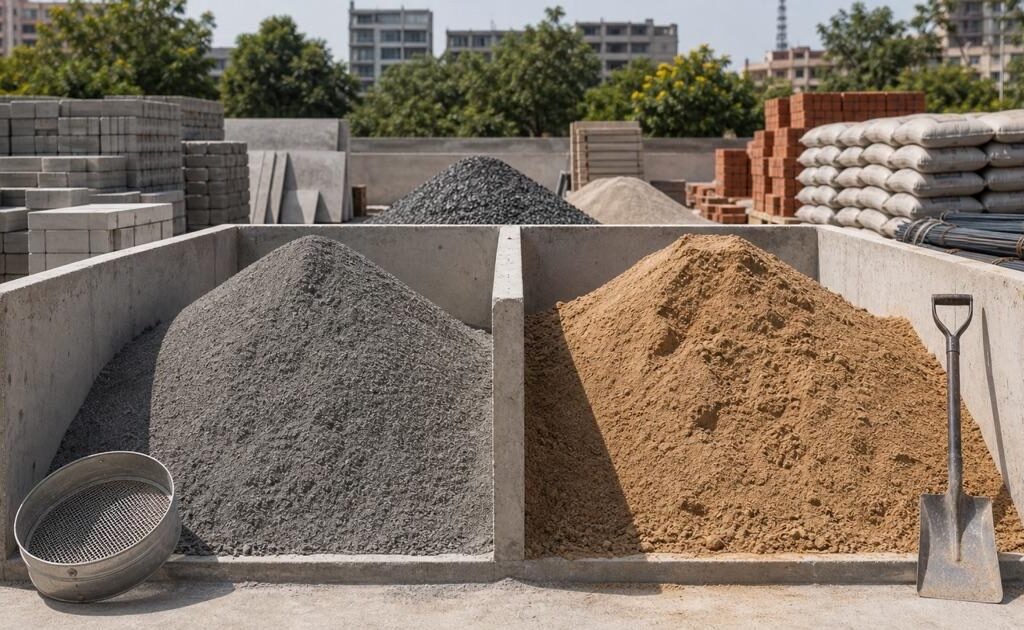
At [Your Business Name], we supply construction materials for projects ranging from foundation work to final finishing. Our material supply includes M-Sand, P-Sand, concrete sand and other commonly used construction aggregates and building materials, subject to availability and project requirements.
We understand that every construction project has different needs. The sand used for concrete work may not be the same as the material selected for plastering or other finishing applications. Choosing the correct material helps contractors follow the project specifications, manage material consumption and maintain consistent workmanship.
If you are looking for M-Sand suppliers in Mysore, P-Sand dealers in Mysuru or a dependable source for construction sand delivery, our team can help you identify the material suitable for your work.
Contact us to discuss your requirements, confirm current prices and check delivery availability for your construction site.
Table of Contents
- Introduction to construction sand in Mysore
- Why choosing a reliable sand dealer matters
- What is M-Sand?
- What is P-Sand?
- M-Sand vs P-Sand: Key differences
- Types of construction sand we supply
- Choosing sand for different construction stages
- How to select quality M-Sand and P-Sand
- Factors affecting sand prices in Mysore
- Benefits of buying construction materials from one supplier
- Construction sand delivery in Mysore
- Common mistakes to avoid when purchasing sand
- Sustainable construction and manufactured sand
- Frequently asked questions
- Contact our team for a sand supply quotation
1. Introduction to Construction Sand in Mysore
Mysore, also known as Mysuru, continues to attract residential construction, home renovation, commercial development and infrastructure-related activity. For homeowners, builders and contractors, arranging the right building materials at the right time is an important part of completing a project efficiently.
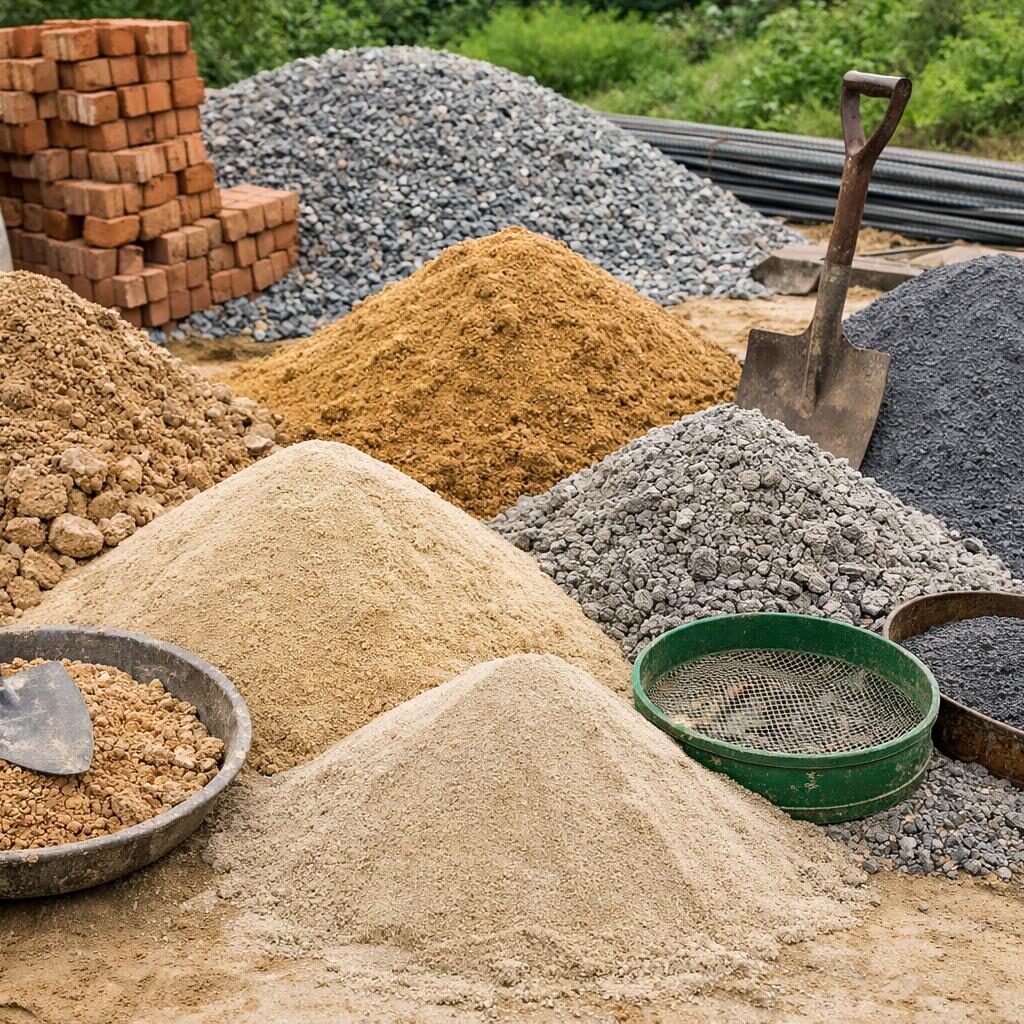
Sand is one of the most widely used materials in construction. It is required for various applications, including concrete production, plastering, masonry work, flooring preparation and other building activities. However, sand is not a single uniform product. Different varieties have different particle characteristics and intended uses.
For example, manufactured sand used in concrete must be suitable for the specified concrete mix. Plastering sand needs characteristics appropriate for the required surface finish. The correct choice depends on the material grading, cleanliness, project specification and recommendations from the engineer or contractor.
Finding reliable M-Sand and P-Sand dealers in Mysore helps you obtain materials that match your construction requirements rather than choosing a product based only on its price.
At [Your Business Name], we aim to make construction material procurement more convenient by supplying a range of building materials from foundation to finishing. Customers can discuss their project stage, estimated quantity and delivery location before placing an order.

Who can benefit from our sand supply?
Our construction material supply service may be suitable for:
- Homeowners building independent houses or villas.
- Builders and real estate developers managing multiple projects.
- Civil contractors handling residential and commercial construction.
- Masons and plastering teams requiring suitable finishing sand.
- Concrete contractors arranging materials for specified mixes.
- Property owners carrying out repairs, extensions or renovations.
- Commercial property developers and institutional construction teams.
Every project is different, so we recommend confirming the required sand type, grading, quantity and delivery arrangements before ordering.
2. Why Choosing a Reliable Sand Dealer Matters
Sand quality influences how construction materials perform in their intended applications. Poorly selected or inconsistent material can create practical problems, including difficulties during mixing, uneven finishing and variation in material consumption.
A dependable supplier does more than arrange a truckload of sand. The supplier should understand the product being requested, communicate the available options clearly and help coordinate delivery according to the customer’s requirements.
2.1 Correct material for the intended application
Concrete work, plastering and masonry can require different sand characteristics. Ordering the wrong variety may lead to unnecessary handling, additional costs or delays while the correct material is arranged.
Before ordering, explain whether the sand is intended for an RCC structure, a concrete floor, plastering, brickwork or another application.
2.2 Clear quantity and pricing
Customers should know how the material is measured and priced. Confirm whether the quotation covers the material alone or includes transportation, loading, unloading and applicable taxes.
For bulk purchases, ask the supplier to explain the quoted quantity and delivery terms. This makes it easier to compare quotations fairly.
2.3 Consistent supply for ongoing projects
Large construction projects often require multiple deliveries. Consistent communication helps contractors plan their work and reduce interruptions caused by material shortages.
If your project requires regular deliveries, discuss the expected quantity, delivery frequency and site access before confirming the order.
2.4 Convenient local coordination
Working with a supplier serving Mysore can make it easier to discuss site requirements, delivery routes and unloading arrangements. Actual delivery coverage and timing depend on the destination, vehicle availability and current operating conditions.
2.5 Support for construction from foundation to finish
A project requires more than sand. It may also require cement, aggregates, bricks, blocks, steel, stone products and finishing materials.
A supplier offering multiple categories can simplify purchasing by reducing the number of separate orders and helping the customer coordinate different materials.
3. What Is M-Sand?
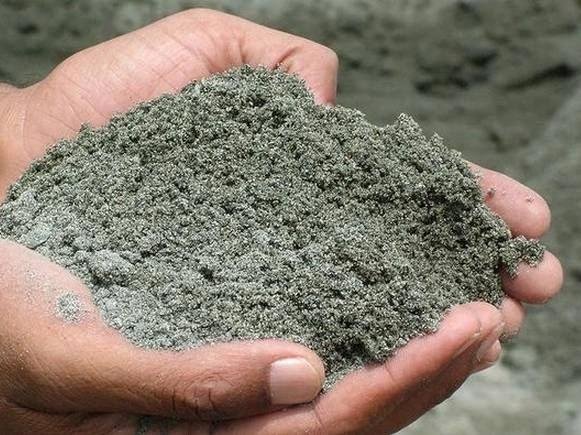
M-Sand stands for manufactured sand. It is produced by mechanically crushing suitable rock or stone and processing the resulting material to obtain sand-sized particles.
Manufactured sand is commonly used as an alternative to natural river sand in appropriate construction applications. Its suitability depends on the source rock, manufacturing process, particle grading, fines content and compliance with the relevant project requirements.
M-Sand is not automatically suitable for every type of construction work. Different products can have different properties, so buyers should select a grade intended for the application.
3.1 Common uses of M-Sand
Depending on its specifications and the project design, M-Sand may be used for:
- Concrete production.
- Reinforced cement concrete work when approved for the specified mix.
- Concrete slabs, beams and columns as part of a designed mix.
- Footings and foundations where the specified concrete mix permits it.
- Concrete flooring and other approved concrete applications.
- Precast concrete products.
- Other applications where the material meets the required specification.
The final choice should be based on the concrete mix design and the engineer’s instructions, not solely on the product name.
3.2 What should you check before buying M-Sand?
Before purchasing M-Sand, consider the following:
Particle grading: The distribution of particle sizes affects packing and the behaviour of the concrete mix.
Cleanliness: Excessive unwanted contaminants can affect material performance. Ask about the product’s quality checks.
Fines content: Fine particles influence water demand and mix behaviour. The acceptable level depends on the applicable specification.
Source and processing: Understanding the source and processing method can help you compare suppliers.
Testing and compliance: For structural concrete, request relevant test information or documentation where required by the project.
Consistency between deliveries: If your project requires repeated orders, discuss how the supplier maintains consistency between batches.
3.3 Is M-Sand suitable for house construction?
M-Sand can be suitable for many parts of house construction when the product meets the applicable requirements and is used in the correct application.
For example, concrete-grade manufactured sand may be considered for approved concrete mixes. However, the material must be selected according to the structural design, mix requirements and relevant standards.
Do not assume that every product sold as M-Sand has identical properties. Confirm the intended application with your engineer or contractor before placing the order.
3.4 Who should consider buying M-Sand?
M-Sand may be an appropriate option for builders, contractors and homeowners who require manufactured sand for an approved construction application and want to compare it with other available materials.
If you are searching for M-Sand suppliers in Mysore, explain your project requirements and ask which product grades are available for your intended use.
4. What Is P-Sand?
P-Sand commonly refers to plastering sand. It is processed or selected for plastering applications, where the quality of the sand can influence the workability of the plaster mortar and the appearance of the finished surface.
Plastering requires material that works well with the specified cement or mortar system and the required finish. Sand that is appropriate for one construction application may not produce the same results when used for a different purpose.
P-Sand should therefore be selected according to its grading, cleanliness and suitability for the plastering specification.
4.1 Common uses of P-Sand
P-Sand is commonly considered for:
- Internal wall plastering.
- External wall plastering when suitable for the specification.
- Surface preparation and finishing work.
- Cement-sand plaster mortar.
- Other plastering applications approved by the project team.
The actual product specification should determine whether the material is suitable for the particular job.
4.2 Why is plastering sand important?
Plastering is one of the stages that determines how walls look and how well the specified finish can be achieved.
Sand that is unsuitable for plastering can make mortar difficult to work with or contribute to an inconsistent surface. The result also depends on the cement, water, substrate preparation, mixing method, application thickness, curing and workmanship.
Suitable P-Sand helps the plastering team prepare mortar according to the specified requirements.
4.3 What should you check when buying P-Sand?
Before placing an order, ask about:
- The intended plastering application.
- Particle grading and texture.
- The presence of unwanted organic matter or other contaminants.
- Moisture conditions and handling.
- Product consistency.
- Suitability for the specified mortar.
- Delivery quantity and unloading arrangements.
For a large project, discuss any testing or approval requirements with your contractor or engineer.
4.4 Is P-Sand suitable for both internal and external walls?
A suitable plastering sand may be used for internal or external plastering when it meets the requirements of the specified mortar and application.
External plastering may have additional performance requirements because the surface is exposed to weather. Your contractor should select the appropriate material and mortar system rather than assuming that every plastering sand is interchangeable.
5. M-Sand vs P-Sand: Key Differences
Although both products are used in construction, M-Sand and P-Sand are generally selected for different applications.
| Feature | M-Sand | P-Sand |
|---|---|---|
| Common meaning | Manufactured sand | Plastering sand |
| Typical application | Concrete and other approved uses | Plastering and finishing |
| Main selection factor | Compliance with concrete or application specifications | Suitability for plaster mortar and surface finish |
| Grading requirements | Must suit the specified mix | Must suit the specified plastering application |
| Quality checks | Grading, fines, cleanliness and relevant tests | Texture, grading, cleanliness and relevant checks |
| Final selection | Engineer or mix specification | Contractor, plaster specification or engineer |
These are general descriptions. Actual product properties can vary between suppliers, so confirm the technical specifications of the material being delivered.
5.1 Which sand is better for concrete?
For concrete, select a product that meets the requirements of the specified concrete mix. M-Sand is commonly used for this purpose when it complies with the applicable requirements.
Do not choose a material for structural concrete only because it is inexpensive or readily available.
5.2 Which sand is better for plastering?
For plastering, a suitable P-Sand product is often the relevant choice. The final selection should consider the desired finish, the mortar specification and the recommendations of the construction professional.
5.3 Can M-Sand and P-Sand be used interchangeably?
Not automatically. The two products may have different particle characteristics and intended uses.
Using the wrong grade can affect workability and the performance of the mortar or concrete. Always verify the product’s suitability before substituting one sand type for another.
6. Types of Construction Sand We Supply
At [Your Business Name], we supply construction materials for different stages of building work. Our sand range includes M-Sand, P-Sand, concrete sand and other varieties according to availability and the customer’s requirements.
The following sections explain common sand categories and what buyers should consider when choosing them.
6.1 M-Sand for concrete work
Manufactured sand for concrete is selected for use in concrete mixes that permit it. Particle grading, fines content and other material characteristics should meet the relevant requirements.
It may be used in approved concrete applications such as slabs, beams, columns, footings and concrete flooring.
Before ordering, tell us the type of concrete work and confirm the required grade with your engineer or contractor.
6.2 P-Sand for plastering
Plastering sand is selected for mortar applications where a suitable texture and grading are important.
It may be used for internal walls, external walls and other plastering work when the product matches the specification.
If your project is approaching the plastering stage, estimate the quantity required with your contractor and arrange delivery to suit the work schedule.
6.3 Concrete sand
Concrete sand is a broad commercial description for sand intended for concrete production. The exact properties can vary depending on the supplier and product.
For concrete applications, ask about grading, cleanliness and the relevant test results. Confirm that the material is approved for your mix design.
Do not assume that all products marketed as concrete sand are identical to M-Sand or meet the same specification.
6.4 Manufactured sand
Manufactured sand is produced by crushing and processing suitable rock. It can be used in various construction applications when it meets the required material standards.
The term may describe products with different particle distributions and processing methods. Ask the supplier to identify the specific grade and intended application.
6.5 Fine sand
Fine sand contains a higher proportion of smaller particles than a coarser sand product. Whether it is appropriate depends on the intended use and the applicable grading requirements.
A finer material is not automatically better for every application. Excessive fine particles can influence water demand and workability.
Confirm suitability before using fine sand in concrete, mortar or finishing work.
6.6 Coarse sand
Coarse sand has comparatively larger particles within the relevant grading range. Its suitability depends on the application and the overall particle-size distribution.
Do not select coarse sand solely by appearance. Check whether the grading is appropriate for the concrete or mortar specification.
6.7 Natural sand
Natural sand is obtained from natural deposits. Its characteristics can vary by source and processing.
Where natural sand is considered for a construction project, confirm its legal source, cleanliness, grading and compliance with the relevant requirements. Availability and permitted use may vary.
6.8 River sand
River sand is associated with river deposits and has historically been used for a variety of construction applications.
Its suitability depends on grading, cleanliness and other material characteristics. Buyers should also verify lawful sourcing and local requirements.
Manufactured sand may be an alternative for suitable applications, subject to technical approval.
6.9 Other specialised sand products
Some projects require particular sand grades or blends for specific purposes. Examples may include specialised mortar applications, paving systems or other products defined by a project specification.
Availability varies. Share the product description or technical specification with us so we can confirm whether a suitable material can be supplied.
Important: Sand names can differ between markets and suppliers. Always confirm the actual product grade and intended use instead of relying on the name alone.
7. Choosing Sand for Different Construction Stages
Construction usually progresses through several stages, and each stage has different material requirements. Planning sand purchases according to the work schedule can help reduce wastage and avoid unnecessary storage.
7.1 Foundation and footing work
Foundation work may involve excavation, reinforcement, formwork, concrete placement and other activities depending on the design.
Where concrete is specified, the sand must be suitable for the approved concrete mix. Do not substitute material without the engineer’s approval.
The required quantity depends on the dimensions of the work, the mix design and the construction method.
7.2 Columns, beams and slabs
Reinforced concrete elements require careful control of material quality and concrete production.
Use sand that meets the requirements of the approved mix. Coordinate the delivery with the concreting schedule so that the material is available when needed without creating unnecessary site congestion.
7.3 Brickwork and blockwork
Masonry work generally uses mortar according to the type of brick or block, the design and the relevant construction specification.
The sand must be suitable for the specified mortar. Ask your contractor whether the required material is intended for masonry mortar, plastering or another application.
7.4 Internal wall plastering
Internal plastering requires suitable sand and mortar to achieve the specified surface finish.
Material selection is only one part of the process. Proper substrate preparation, mortar mixing, application and curing are also important.
7.5 External wall plastering
External walls may be exposed to sunlight, rain and changes in temperature. Select materials and a mortar system appropriate for the specified external application.
Follow the contractor’s instructions for preparation, thickness, curing and any additional protective finish.
7.6 Flooring and other finishing work
Flooring preparation and finishing systems may use different materials depending on the type of floor, screed or bedding required.
Do not assume that ordinary construction sand is suitable for every flooring system. Confirm the product requirements before ordering.
7.7 Renovation and repair work
Renovation projects may need smaller or more frequent deliveries. Before ordering, determine the work area, type of mortar or concrete, storage capacity and access for delivery vehicles.
A planned delivery can help avoid leaving excess material exposed to rain, contamination or obstruction on a busy property.
8. How to Select Quality M-Sand and P-Sand
Choosing a reliable supplier is important, but buyers should also understand the basic checks that help establish whether the material is appropriate for the project.
8.1 Ask for the product specification
Request the available details about the sand grade and intended application. For structural or specification-controlled work, discuss the relevant requirements with your engineer.
8.2 Review test documentation where necessary
Some projects require test reports or documentation demonstrating that materials comply with the relevant specification.
Ask the supplier what documentation is available, and have the responsible technical professional review it when required.
8.3 Avoid judging quality by colour alone
Sand colour can vary because of the source material and processing. Colour by itself does not prove that sand is suitable or unsuitable.
Use relevant material specifications and quality checks rather than relying only on appearance.
8.4 Check for unwanted contamination
Visible organic matter, rubbish or other unwanted material should raise questions about the product’s suitability.
Visual inspection is useful but cannot replace appropriate testing where testing is required.
8.5 Confirm consistency between loads
For ongoing work, ask whether repeated deliveries will follow the same product specification. Consistency helps contractors manage mixing and application more predictably.
8.6 Match the sand to the work
The most expensive product is not necessarily the correct one, and the cheapest product is not always the best value.
Choose a suitable material that meets the technical requirements of the application and fits the project’s delivery and budget needs.
9. Factors Affecting Sand Prices in Mysore
The price of construction sand can change according to the product, quantity, source, processing, transport and market conditions.
Instead of relying on an old online price, request a current quotation for your required material and delivery location.
9.1 Type and grade of sand
Different sand products may have different processing requirements and specifications. M-Sand for concrete and P-Sand for plastering should not automatically be compared as though they were the same product.
9.2 Order quantity
The quantity required can affect transportation arrangements and the overall quotation. Ask how the material is measured and how the quantity will be confirmed.
9.3 Delivery distance
Transportation costs can vary depending on the source, destination, road conditions and vehicle availability.
A delivery within one part of Mysore may have different costs from a delivery to a more distant site.
9.4 Vehicle and site access
Narrow roads, restricted entry, limited unloading space and site-specific vehicle requirements may affect delivery arrangements.
Explain any access limitations before confirming your order.
9.5 Market availability
Prices may vary according to supply, demand, processing costs and local transport conditions.
For an accurate estimate, request a current quotation rather than assuming that an advertised rate will remain unchanged.
9.6 Loading, unloading and other charges
Check whether the quotation includes transportation, loading, unloading and applicable taxes.
A clear quotation helps you compare suppliers on the total delivered cost rather than the material rate alone.
9.7 How to request an accurate quotation
When contacting a supplier, provide:
- The sand type and intended application.
- The estimated quantity.
- The delivery address or locality.
- The preferred delivery date.
- Any site access or unloading restrictions.
- Any required technical specification.
This information makes it easier to assess availability and provide a useful quotation.
10. Benefits of Buying Construction Materials From One Supplier
Managing several suppliers can take time, particularly when a construction project requires materials at different stages.
A supplier offering multiple construction material categories may help simplify procurement and coordination.
10.1 Convenient purchasing
Customers can discuss several material requirements through one point of contact, depending on the supplier’s available product range.
10.2 Better coordination
Planning the timing of sand, aggregates and other materials can help the site team organise its work more efficiently.
10.3 Clearer order tracking
Keeping quotations, quantities and delivery details organised helps reduce misunderstandings between the customer, supplier and site team.
10.4 Support from foundation to finishing
At [Your Business Name], our construction material supply approach covers the different stages of a building project. Depending on availability, customers can enquire about sand and other required building materials through the same supplier.
10.5 Less procurement complexity
A coordinated supply arrangement can make it easier to manage repeat orders and communicate changes in requirements.
These benefits depend on the supplier’s actual inventory, service area and delivery capacity. Confirm the details before relying on a particular delivery schedule.
11. Construction Sand Delivery in Mysore
Getting the right material to the right site at the right time is a practical concern for homeowners, builders and contractors.
Before scheduling a delivery, share the location and expected quantity. Confirm vehicle access, unloading arrangements and the delivery window with the supplier.
11.1 Residential construction sites
Residential sites may have limited storage space or narrow access roads. Smaller or staged deliveries may be more practical depending on the project and available transport options.
11.2 Apartment and commercial projects
Larger projects may need repeated deliveries and coordination with the site supervisor.
Discuss the expected consumption rate, storage capacity and delivery sequence to reduce unnecessary delays.
11.3 Renovation projects
Renovation work may take place in occupied properties or busy neighbourhoods. Confirm whether the delivery vehicle can enter the site and where the material can be unloaded safely.
11.4 Planning a delivery
Before the truck is dispatched, confirm:
- The correct sand type and grade.
- The quantity and measurement method.
- The delivery address.
- The quotation and included charges.
- The delivery timing.
- The unloading location and access conditions.
Clear communication helps both the supplier and the customer prepare for the delivery.
12. Common Mistakes to Avoid When Purchasing Sand
Mistake 1: Choosing only by price
Price is important, but it should not be the only factor. A product that does not meet the construction specification may create additional work or costs.
Mistake 2: Using one type of sand for every application
Concrete and plastering can require different material characteristics. Confirm the correct product before ordering.
Mistake 3: Ignoring specifications
For structural work or other controlled applications, follow the relevant design, mix requirements and technical standards.
Mistake 4: Ordering without estimating the quantity
Under-ordering may interrupt work, while over-ordering can create storage problems and wastage. Ask your contractor to estimate the required quantity.
Mistake 5: Forgetting transportation charges
Compare quotations based on the total delivered cost and the stated quantity, not only the advertised material price.
Mistake 6: Failing to check site access
A vehicle may not be able to enter every construction site. Discuss road width, overhead restrictions, unloading space and other access issues beforehand.
Mistake 7: Leaving sand exposed to contamination
Store sand in an appropriate location where it is less likely to mix with soil, rubbish or other unwanted materials.
Mistake 8: Assuming every supplier offers the same grade
Product names can be used differently. Ask what grade is supplied and what application it is intended for.
13. Sustainable Construction and Manufactured Sand
Material selection is increasingly important as builders look for practical ways to manage construction costs, resource use and environmental impacts.
Manufactured sand can provide an alternative to natural sand for suitable applications. Its potential benefits depend on the source rock, production process, energy use, transportation distance and quality of the final product.
13.1 Responsible material selection
Choose materials according to their technical suitability and the project’s requirements. Avoid unnecessary substitutions that may affect construction quality.
13.2 Reducing material wastage
Accurate quantity planning, careful storage and timely ordering can help reduce wastage on construction sites.
13.3 Checking material sources
For natural sand and other materials, buyers should consider lawful sourcing and any applicable local requirements.
13.4 Balancing cost and performance
A practical construction decision considers the delivered cost, suitability, consistency and performance requirements of the material.
For more information about sustainable construction and building materials, consult the relevant technical standards and official guidance rather than relying on general product claims.
14. Why Choose [Your Business Name] for Construction Materials in Mysore?
Finding a supplier who understands your material requirements can make purchasing easier throughout a construction project.
At [Your Business Name], we supply construction materials for different stages of building work, from foundation requirements to finishing materials.
A range of construction materials
Customers can enquire about M-Sand, P-Sand, concrete sand and other construction materials according to availability and project needs.
Material selection based on your work
Tell us whether you need sand for concrete, plastering, masonry or another application. We can discuss the available product options and help you confirm the details before ordering.
For technical approval, follow the instructions of your engineer or contractor.
Clear quotation and delivery discussion
Share your required quantity and site location so that the available delivery arrangements and quotation can be discussed clearly.
Supply for different project sizes
Whether you are planning a house, renovation or larger construction project, contact us to discuss the materials required and the practical arrangements for supply.
Support across construction stages
Our wider construction material range helps customers enquire about more than one category of building material through a single point of contact, subject to availability.
Local customer service
For projects in Mysore, discuss the delivery locality, site access and required schedule with our team before confirming an order.
We believe that clear communication and suitable material selection are important parts of a good supply experience.
15. How to Order M-Sand and P-Sand in Mysore
If you are ready to arrange construction sand, the following steps can help you place an informed order.
Step 1: Identify your requirement. Decide whether you need M-Sand, P-Sand, concrete sand or another specified product.
Step 2: Confirm the application. Explain whether the material is intended for concrete, plastering, masonry or other work.
Step 3: Estimate the quantity. Ask your contractor or site supervisor to calculate the requirement.
Step 4: Share the delivery location. Provide the locality and explain any restrictions affecting vehicle access.
Step 5: Request a quotation. Confirm the material rate, measurement method, transportation charges and other applicable costs.
Step 6: Confirm availability. Check the product grade, quantity and delivery schedule before placing the order.
Step 7: Prepare the site. Ensure that the delivery vehicle has appropriate access and that a suitable unloading and storage area is available.
To enquire about sand supply, contact [Your Business Name] using the phone number or enquiry form on our website.
16. Frequently Asked Questions About M-Sand and P-Sand Dealers Near You
1. Where can I find trusted M-Sand and P-Sand dealers near me in Mysore?
You can contact [Your Business Name] to enquire about M-Sand, P-Sand and other construction materials. Share your project requirements and delivery locality to confirm product availability, pricing and service coverage.
2. What is the difference between M-Sand and P-Sand?
M-Sand generally refers to manufactured sand commonly used in concrete and other approved applications. P-Sand commonly refers to plastering sand selected for plaster mortar. The actual product specification determines whether a particular material is suitable for your project.
3. Can M-Sand be used for house construction?
Yes, suitable manufactured sand can be used for various house construction applications when it meets the relevant requirements. For structural concrete, follow the approved mix design and your engineer’s instructions.
4. Is P-Sand suitable for wall plastering?
P-Sand is commonly intended for plastering applications. Confirm its grading, cleanliness and suitability for the specified mortar before ordering.
5. Do you supply concrete sand in Mysore?
[Your Business Name] accepts enquiries for concrete sand and other construction materials. Contact us to confirm the available product, grade, quantity and delivery arrangements.
6. What is the price of M-Sand in Mysore?
The price depends on the product grade, quantity, source, transport distance and current market conditions. Request a current quotation for your required quantity and delivery location.
7. What is the price of P-Sand in Mysore?
P-Sand prices can vary according to the product, quantity and delivery arrangements. Contact the supplier for a current rate and confirm whether transportation and other charges are included.
8. Can I order sand for a small residential project?
You can enquire about the quantity and delivery options available for your project. The minimum order and vehicle arrangements depend on the supplier’s current operating conditions.
9. Can sand be delivered directly to my construction site?
Site delivery may be available depending on the location, product, quantity, vehicle availability and road access. Confirm the delivery arrangements before placing your order.
10. Which sand is best for concrete work?
Use sand that meets the requirements of the specified concrete mix. Manufactured sand may be suitable when it complies with the relevant technical requirements and is approved for the application.
11. Which sand should I choose for plastering?
Choose plastering sand that matches the specified mortar and required finish. Your contractor can help determine the appropriate product grade.
12. Can I use P-Sand instead of M-Sand?
Do not substitute one type for another without checking its suitability. Their intended applications and particle characteristics may differ.
13. How much sand is required to build a house?
The quantity depends on the built-up area, structural design, concrete and mortar requirements, plastering area, wastage allowance and construction method. Ask your contractor or quantity surveyor to prepare an estimate based on your drawings.
14. How can I check sand quality?
Check the product specification, grading, cleanliness and relevant test documentation where required. Visual inspection alone cannot establish compliance with every technical requirement.
15. Should I order all my sand at once?
That depends on storage space, construction progress, expected consumption and delivery costs. Staged deliveries may be more practical when storage is limited or material requirements change between construction stages.
16. Do you supply other construction materials besides sand?
[Your Business Name] supplies a range of construction materials from foundation to finishing. Contact us to confirm the products currently available for your project.
17. How do I get a quotation for construction sand?
Share the sand type, intended application, estimated quantity, delivery locality and preferred delivery date. Ask for a quotation that clearly identifies the product and included charges.
18. Is manufactured sand an alternative to river sand?
Manufactured sand can be an alternative in suitable applications when it meets the relevant requirements. The decision should consider the technical specification, material quality and project approval.
19. Can the same sand be used for internal and external plastering?
A product may be suitable for both applications if it meets the requirements of the specified mortar. External conditions and project specifications may require additional consideration, so consult your contractor.
20. How early should I arrange a sand delivery?
Arrange the order in line with the construction schedule and confirm availability with the supplier. For large quantities or time-sensitive work, advance coordination can help reduce the risk of delays.
17. Contact Your Construction Material Supplier in Mysore
Choosing the right sand is an important decision for any construction project. Whether you need manufactured sand for approved concrete work, plastering sand for wall finishing or another suitable construction sand, the material should match your project’s technical requirements.
At [Your Business Name], we supply construction materials for different building stages, from foundation to finishing. We welcome enquiries from homeowners, builders, contractors and developers looking for construction material supply in Mysore.
Contact our team to discuss your sand requirements, check availability and request a quotation based on your quantity and delivery location.
Looking for M-Sand and P-Sand in Mysore?
- Tell us which type of sand you require.
- Share your estimated quantity and construction site location.
- Confirm the available product grade, quotation and delivery terms.
- Arrange supply according to your construction schedule.
MCMS INDIA — Your construction material supply partner in Mysore.
Phone: 9686608901
Website: mcmsindia.com
Service area: C&D Block, 1113, Lalithadri road, 1st Cross Rd, Kuvempu Nagara, Mysuru, Karnataka 570023
Contact us today to discuss your construction material requirements.
Call for more info 9686608901
We will never break your trust like others do