




Best Soil Bricks For Strong Sustainable Construction

Best Soil Bricks For Strong Sustainable Construction in Mysore
Best Soil Bricks For Strong Sustainable Construction are an excellent choice for builders, homeowners, contractors and developers looking for reliable walling materials with a balance of strength, durability, appearance and sustainability. In Mysore, where residential homes, commercial buildings, farmhouses and renovation projects are growing rapidly, selecting the right brick can make a significant difference to the quality and long-term performance of a building.
We are a construction materials supplier in Mysore, supplying a wide range of materials required for construction from foundation to finish. Our brick and block range can be selected according to the type of project, wall requirement, budget, design and construction method.
Whether you are constructing a new house in Mysore, developing a commercial property, building a farmhouse or working on a renovation project, choosing the correct soil brick is an important decision.
In this guide, we explain the different types of soil-based bricks and related masonry products available for construction, their advantages, applications, selection factors and why sourcing the right material from a reliable local construction materials supplier matters.
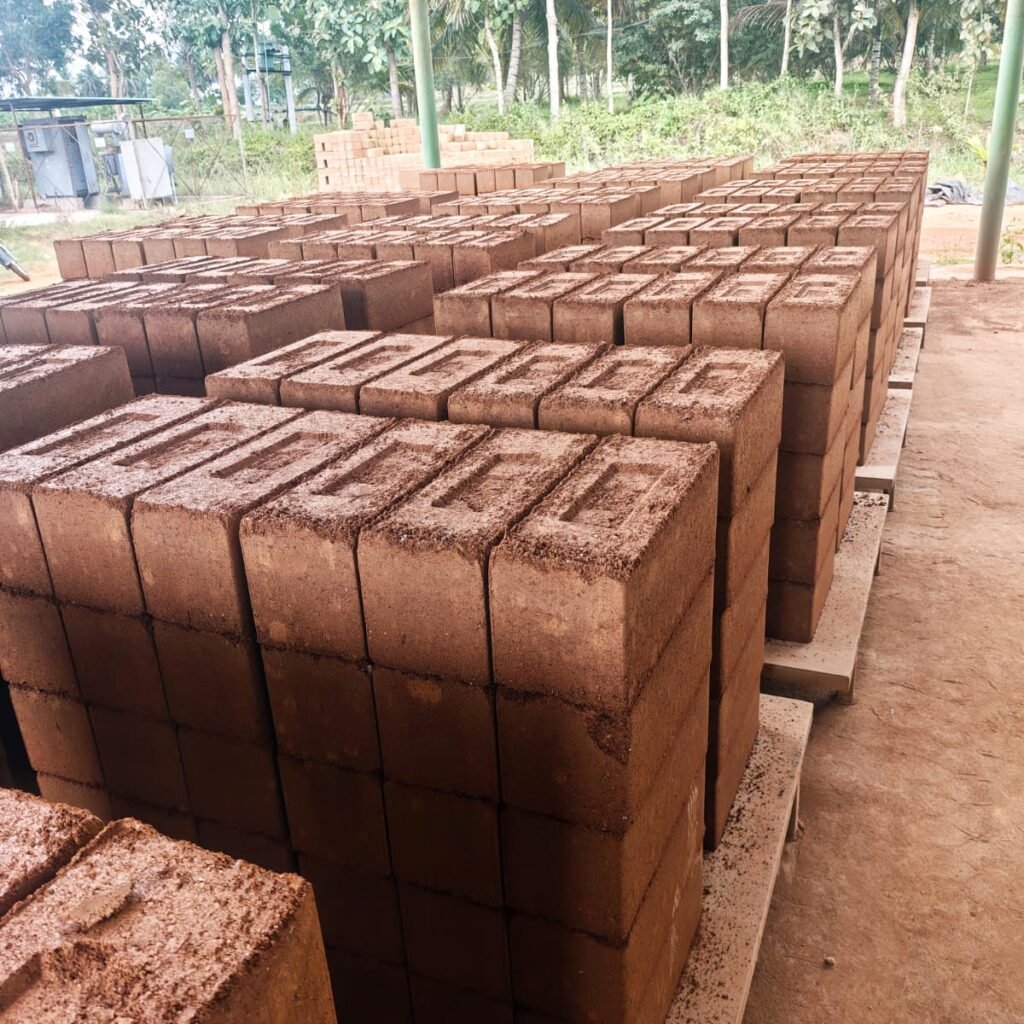
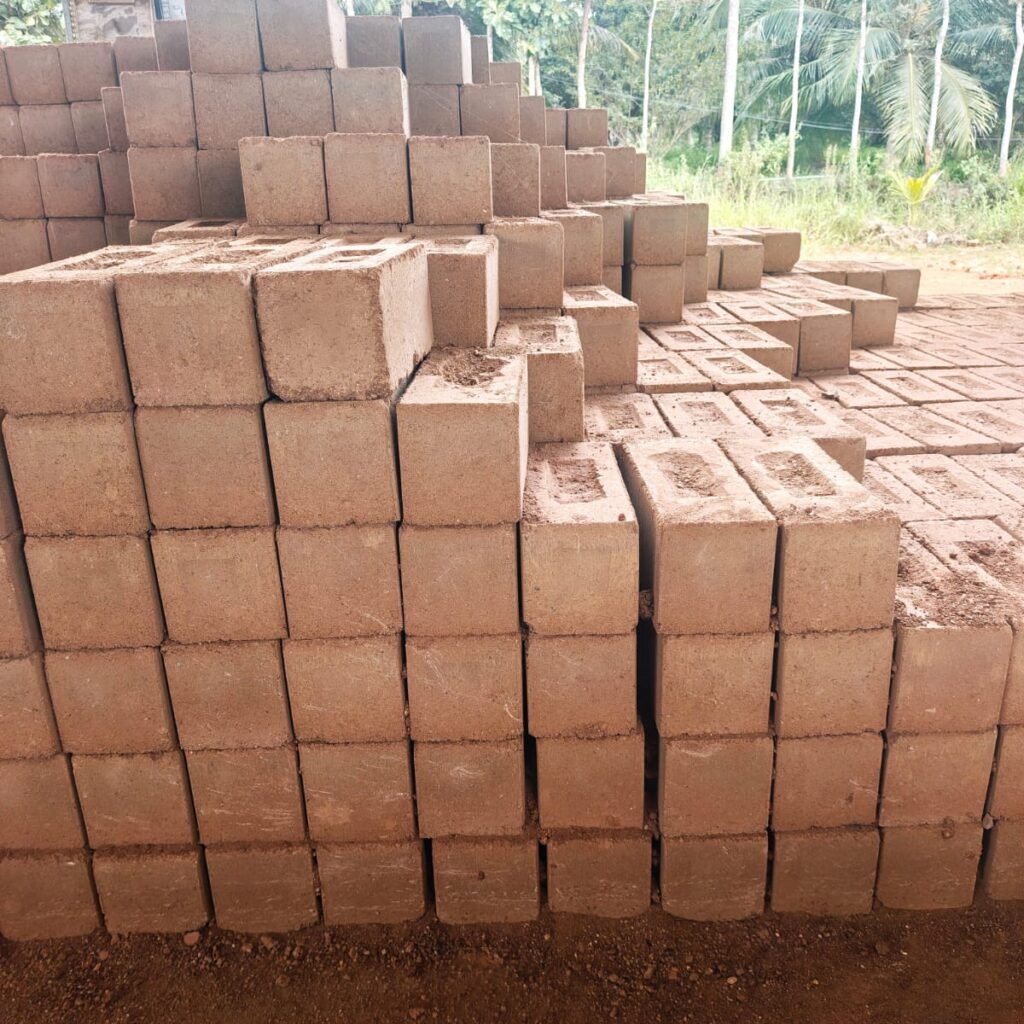
Table of Contents
- What Are Soil Bricks?
- Why Choose Soil Bricks for Construction?
- Best Soil Bricks For Strong Sustainable Construction
- Types of Soil Bricks We Supply in Mysore
- Burnt Clay Bricks
- Wire Cut Bricks
- Table-Moulded Bricks
- Country Bricks
- Compressed Earth Blocks
- Stabilized Soil and Mud Blocks
- Fly Ash Bricks and Alternative Masonry Units
- How to Choose the Right Brick for Your Mysore Project
- Benefits of Buying Bricks From a Local Mysore Supplier
- Common Mistakes to Avoid When Buying Soil Bricks
- Soil Bricks for Different Construction Projects
- Why Quality Matters in Brick Construction
- Frequently Asked Questions
- Order Construction Materials in Mysore
What Are Soil Bricks?
Soil bricks are masonry units manufactured primarily using earth or soil-based raw materials. Depending on the manufacturing process, the soil may be moulded, compressed, stabilized, dried or fired to produce bricks suitable for different construction applications.
Traditional burnt clay bricks have been used in India for generations. Modern construction also uses products such as wire-cut bricks, compressed earth blocks and stabilized soil blocks.
The quality of a soil-based brick depends on several factors, including the raw material, manufacturing process, compaction, curing or firing, dimensions, moisture control and quality testing.
The Building Materials and Technology Promotion Council (BMTPC) explains that brick quality is influenced by both the type of soil and the method used to manufacture the brick. It also distinguishes between burnt and unburnt brick technologies.
This means that simply choosing a brick because it looks good or costs less is not enough.
The brick should be appropriate for the specific construction application.
Why Choose Soil Bricks for Construction?
Bricks remain one of the most widely used walling materials because they are practical, familiar to masons and suitable for many types of buildings.
For a homeowner or builder in Mysore, the right brick can offer several advantages.
1. Good durability
Quality bricks can provide durable masonry when they are correctly manufactured, transported, stored and installed.
2. Easy availability
Brick masonry is familiar to contractors and masons throughout Mysore and surrounding areas.
3. Versatile applications
Different brick types can be used for residential walls, partition walls, boundary walls, commercial buildings and other suitable applications.
4. Traditional appearance
Clay and soil-based bricks can provide a natural, traditional appearance that works particularly well with certain architectural styles.
5. Sustainable options
Some earth-based construction technologies can reduce energy use compared with conventional fired products. BMTPC notes that compressed earth blocks can use locally available material and avoid the firing process used for conventional burnt bricks.
However, sustainability should always be considered together with structural requirements, local climate, workmanship and the specific application.
Best Soil Bricks For Strong Sustainable Construction
When selecting the Best Soil Bricks For Strong Sustainable Construction, there is no single brick that is automatically the best for every building.
The ideal product depends on what you are constructing.
For example, a homeowner may prefer a uniform wire-cut brick for a neat masonry finish, while another project may be better suited to compressed earth blocks or stabilized soil blocks.
Some of the commonly considered options include:
- Burnt clay bricks
- Wire-cut bricks
- Table-moulded bricks
- Country bricks
- Compressed earth blocks
- Compressed stabilized earth blocks
- Stabilized mud blocks
- Fly ash bricks and other alternative masonry units
It is important to understand that fly ash bricks are not technically soil bricks. They are a separate category of masonry product. We include them here because they are often considered alongside soil and clay bricks when selecting walling materials.
According to the Bureau of Indian Standards (BIS), fly ash-lime bricks and fly ash-cement bricks are recognized building-material categories with their respective Indian Standards.
Types of Soil Bricks We Supply in Mysore
As a construction materials supplier in Mysore, we can help customers select and arrange the appropriate brick or masonry product according to their project requirements.
Our range can include different varieties of soil-based and alternative bricks such as the following.
Burnt clay bricks
Traditional clay bricks manufactured by moulding and firing suitable clay or soil.
Wire-cut bricks
Machine-produced bricks that generally offer more consistent dimensions and a clean appearance.
Table-moulded bricks
Bricks produced using a moulding process designed to provide a more regular shape than some traditional handmade products.
Country bricks
Traditional bricks generally produced using simpler moulding and firing methods.
Compressed earth blocks
Earth is compressed using a mechanical or manual press to form dense blocks.
Stabilized soil blocks
Soil is stabilized using a suitable binder such as cement or lime, depending on the soil and required application.
Fly ash bricks
A manufactured alternative masonry unit using fly ash and other materials. These are not soil bricks, but they can be considered as an alternative for suitable wall construction.
The exact availability, size and specification can vary according to the project and current supply.
Burnt Clay Bricks
Burnt clay bricks are among the most traditional masonry products used in India.
They are manufactured by moulding suitable clay or soil and then firing the shaped units.
There are different manufacturing methods within the burnt-brick category. BMTPC identifies country bricks, table-moulded bricks and wire-cut bricks among the main types of burnt bricks.
Advantages of burnt clay bricks
- Familiar to local masons
- Suitable for many conventional masonry applications
- Traditional appearance
- Available in different qualities and sizes
- Suitable for residential and other building projects when properly specified
However, quality can vary significantly between manufacturers.
Before purchasing large quantities, it is sensible to check the brick’s dimensions, strength, water absorption, soundness, appearance and overall consistency.
Wire Cut Bricks
Wire-cut bricks are produced using a more mechanized manufacturing process.
A column of prepared material is extruded and then cut into individual bricks using wires. This method can provide relatively consistent dimensions and a uniform appearance.
Wire-cut bricks are particularly attractive when the builder wants clean and regular masonry.
Why builders consider wire-cut bricks
Wire-cut bricks can offer:
- Consistent shape
- Uniform dimensions
- Neater wall construction
- Faster laying when dimensions are consistent
- Attractive exposed-brick possibilities for suitable designs
For modern residential construction in Mysore, wire-cut bricks can be an option when appearance and dimensional consistency are important.
Table-Moulded Bricks
Table-moulded bricks are produced using moulding equipment and a relatively stiff clay mix.
Compared with some traditional handmade bricks, table moulding can provide more regular shapes.
The final quality still depends on the raw material and manufacturing process.
When purchasing table-moulded bricks, look for:
- Uniform size
- Proper firing
- Sharp edges where appropriate
- Absence of excessive cracks
- Consistent colour
- Good soundness
- Appropriate strength for the intended application
Country Bricks
Country bricks are traditional burnt clay bricks produced using comparatively simple methods.
They have historically been used extensively in local construction.
Their appearance and dimensions may vary more than those of modern machine-made bricks.
Country bricks can be useful for certain applications where their characteristics are appropriate, but buyers should pay close attention to quality consistency.
A reliable supplier can help you determine whether a particular batch is suitable for your intended work.
Compressed Earth Blocks
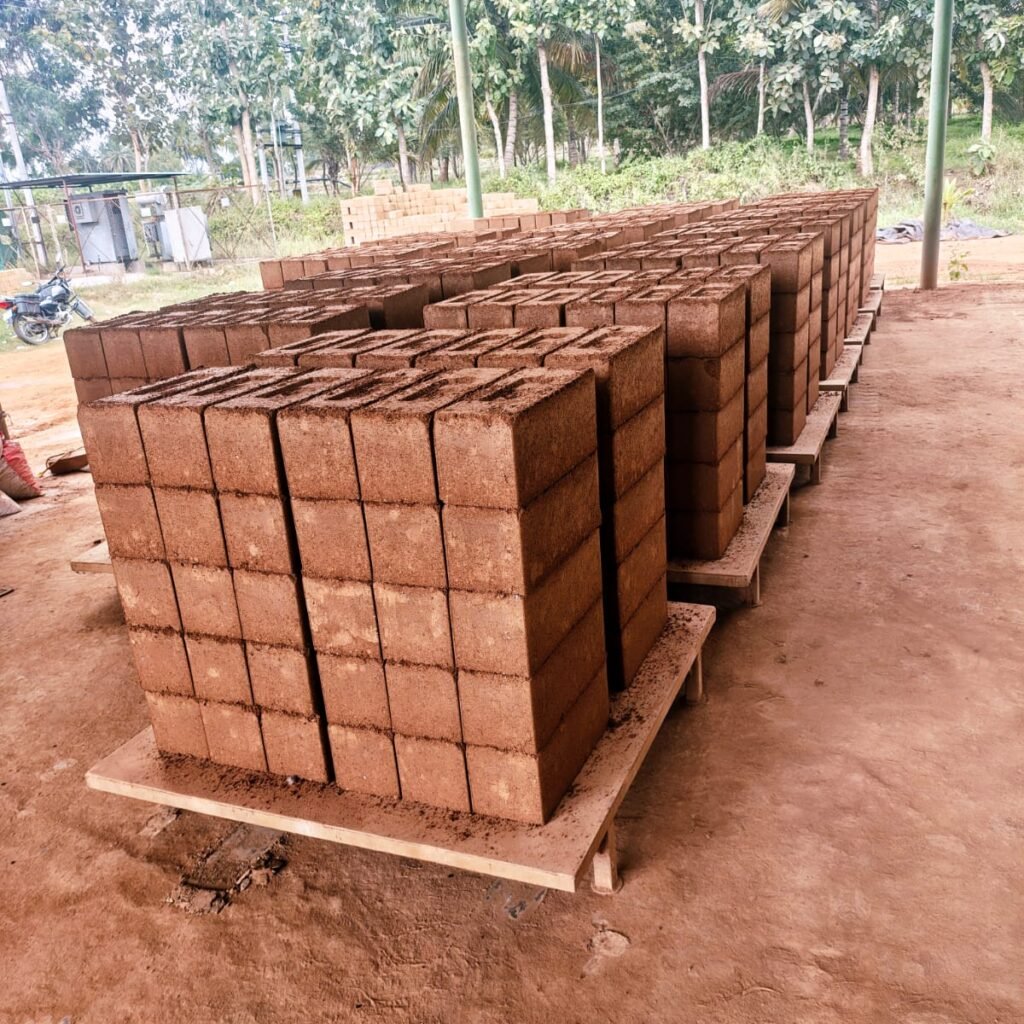
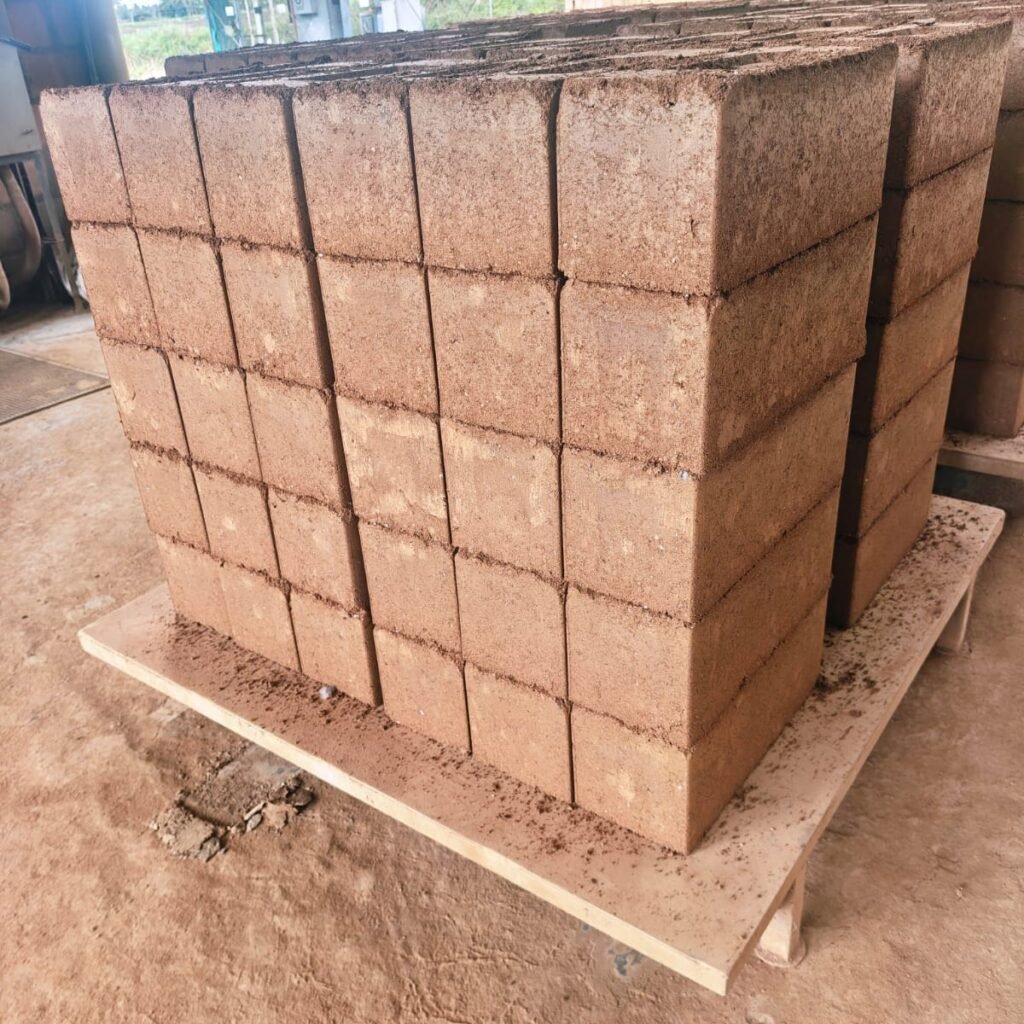
Compressed earth blocks are an interesting option for sustainable construction.
Instead of firing the material in a kiln, suitable soil is moistened and compressed into blocks using a press.
BMTPC describes compressed earth brick/block technology as an alternative to conventional burnt clay bricks. It notes that suitable soil is identified, moistened and compressed, with stabilizers potentially used depending on the soil.
Compressed earth blocks can have several sustainability advantages.
They can use locally available earth and avoid the conventional firing process.
However, not every soil is suitable.
BMTPC specifically notes that topsoil and organic soils should not be used and that proper soil identification is important for producing good-quality compressed earth blocks.
This is why technical suitability should always be checked before selecting compressed earth blocks for a particular building.
Stabilized Soil and Mud Blocks
Stabilized soil blocks are produced by improving the properties of suitable soil with a stabilizing material.
Depending on the soil and technology, cement or lime may be used.
BMTPC notes that cement stabilization can be appropriate for sandy soils, while lime stabilization may be suited to clayey soils.
The objective is to produce a stronger and more moisture-resistant earth-based masonry unit.
Benefits can include
- Use of locally available soil
- Reduced dependence on fired products in some applications
- Potentially lower embodied energy
- Natural appearance
- Good thermal characteristics when appropriately designed
However, stabilized earth construction requires proper material selection, manufacturing and workmanship.
Fly Ash Bricks and Alternative Masonry Units
Fly ash bricks should not be confused with soil bricks.
They are manufactured using fly ash along with other materials such as sand, stone dust, lime and/or cement depending on the product.
BIS identifies fly ash-lime bricks under IS 12894:2002 and fly ash-cement bricks under IS 16720:2018.
Fly ash bricks can be considered when a project requires a consistent manufactured masonry unit.
Other alternatives may include concrete blocks, calcium silicate bricks and AAC blocks.
The correct selection depends on the building design, structural system, wall thickness, availability, local practices and project budget.
How to Choose the Right Brick for Your Mysore Project
Choosing the right brick should be based on more than price.
Here are the most important factors to consider.
1. Understand the application
First determine whether you need bricks for:
- External walls
- Internal partition walls
- Boundary walls
- Residential construction
- Commercial construction
- Farmhouses
- Renovation
- Architectural exposed-brick work
The application determines the appropriate material.
2. Check dimensions
Bricks should be reasonably consistent in size.
Irregular dimensions can increase mortar consumption and make masonry more difficult.
3. Consider compressive strength
Strength requirements depend on the building and structural design.
Do not assume that every brick is suitable for load-bearing construction.
The engineer or architect should specify the required masonry material.
4. Check water absorption
Water absorption is an important property for many masonry applications.
Excessive absorption can affect masonry performance and mortar interaction.
5. Look for cracks and defects
Avoid bricks with excessive cracking, severe warping or obvious manufacturing defects.
6. Consider transportation
A locally available material can reduce transportation distance and simplify site logistics.
BMTPC notes that local materials and skills can be advantageous in walling systems and discusses the value of obtaining building blocks relatively close to the construction site.
7. Buy according to the project specification
The cheapest brick is not necessarily the most economical choice.
A slightly better-quality product may reduce wastage, breakage and masonry difficulties.
Benefits of Buying Bricks From a Local Mysore Supplier
Buying construction materials locally can make project management easier.
As a construction materials supplier in Mysore, our goal is to make material procurement simpler for homeowners, contractors, builders and developers.
One supplier for multiple requirements
Instead of searching separately for every construction material, you can source multiple products through one supplier.
Our construction material supply can cover requirements from foundation to finish, depending on your project.
This can include materials such as:
- Bricks and blocks
- Cement
- Sand and M-sand
- Aggregates
- TMT steel
- Foundation materials
- Plumbing materials
- Electrical materials
- Tiles
- Granite
- Paints
- Finishing materials
- Other construction essentials
This approach can make ordering and coordination more convenient.
Better local coordination
A Mysore-based supplier can also make communication and delivery coordination easier for construction sites within Mysore and nearby areas.
For large projects, material planning is particularly important.
Instead of ordering bricks at the last minute, contractors can plan requirements based on the construction schedule.
Common Mistakes to Avoid When Buying Soil Bricks
Buying only based on price
Price is important, but quality should not be ignored.
A very cheap brick can become expensive if there is excessive breakage, poor dimensions or high wastage.
Not checking the batch
Bricks can vary from one batch to another.
Always inspect the actual material being supplied when possible.
Choosing the wrong brick for the application
A brick suitable for one type of wall may not be appropriate for another.
Always follow the architect’s, engineer’s or project specification.
Ignoring transportation damage
Poor loading and unloading can cause unnecessary breakage.
Proper handling is important from the supplier to the construction site.
Ordering too late
Construction sites need materials according to the work schedule.
Plan brick requirements before the mason reaches the stage where the material is needed.
Soil Bricks for Different Construction Projects
Different projects have different requirements.
Residential houses
For houses in Mysore, homeowners may consider burnt clay bricks, wire-cut bricks, compressed earth blocks, stabilized blocks or alternative masonry units depending on the design.
Villas
Villas often place greater emphasis on appearance as well as performance.
Wire-cut bricks, selected clay bricks and certain earth-based products can be considered depending on the architectural design.
Commercial buildings
Commercial construction generally requires careful consideration of structural requirements, speed of construction, wall thickness and project economics.
Farmhouses
Farmhouses and environmentally conscious projects may explore earth-based walling solutions where the design and technical conditions permit.
Boundary walls
The appropriate brick or block for a boundary wall depends on wall height, exposure, foundation, structural requirements and finishing method.
Why Quality Matters in Brick Construction
A wall is only as reliable as the materials and workmanship used to construct it.
Even a good brick can perform poorly if it is incorrectly installed.
Masonry quality depends on several factors:
- Brick quality
- Mortar quality
- Mason workmanship
- Correct bonding
- Curing
- Wall alignment
- Damp-proofing where required
- Proper detailing around openings
- Lintels and structural elements
- Protection from excessive moisture
BMTPC emphasizes that walls and openings require appropriate construction practices, including provision of lintels over openings.
Therefore, selecting the brick is only one part of building a strong wall.
A Simple Checklist Before Ordering Soil Bricks
Before placing your order, ask:
What type of wall am I building?
What brick specification has my engineer or architect recommended?
What size brick is required?
How many bricks are required?
What strength and quality are required?
Is the material suitable for the local site conditions?
How much transportation is required?
Can the supplier deliver according to my construction schedule?
These questions can help prevent unnecessary material wastage and delays.
Frequently Asked Questions
Which are the Best Soil Bricks For Strong Sustainable Construction?
The best option depends on the project. Burnt clay bricks, wire-cut bricks, compressed earth blocks and stabilized soil blocks each have different characteristics. The correct choice should be based on strength, application, design, durability, availability and project requirements.
Are soil bricks good for house construction in Mysore?
Yes, suitable soil or clay-based bricks can be used in residential construction when they meet the required specifications and are correctly installed.
The exact brick should be selected according to the structural design and walling requirements.
Are wire-cut bricks better than traditional bricks?
Wire-cut bricks can offer more consistent dimensions and a uniform appearance. However, “better” depends on the application, quality and project requirements.
Are compressed earth blocks sustainable?
Compressed earth blocks can be a sustainable walling option because suitable earth can be locally sourced and the blocks can be produced without conventional firing. However, soil selection, stabilization, manufacturing quality and construction technique are critical.
Are fly ash bricks soil bricks?
No. Fly ash bricks are a separate category of manufactured masonry unit. They are commonly considered as an alternative to conventional clay bricks.
How do I know which brick is right for my house?
Start with the construction drawing and specification provided by your architect or structural engineer. Then discuss the required product with a reliable construction material supplier.
Can I order bricks along with other construction materials?
Yes. Sourcing bricks together with other construction materials can make procurement and site delivery easier.
As a construction materials supplier in Mysore, we can help coordinate construction-material requirements from foundation to finish.
Do you supply construction materials in Mysore?
Yes. We supply a wide range of construction materials for residential, commercial and other building projects in Mysore and surrounding areas.
Order Construction Materials in Mysore
Choosing the right brick is an important step toward building a durable and comfortable structure.
Whether you need traditional clay bricks, wire-cut bricks, table-moulded bricks, country bricks, compressed earth blocks, stabilized soil blocks or alternative masonry products, the right selection depends on the requirements of your project.
If you are searching for Best Soil Bricks For Strong Sustainable Construction in Mysore, talk to a local construction material supplier before placing a large order.
We supply construction materials for projects ranging from foundation to finish, helping homeowners, contractors, builders and developers source the materials they need for their construction work.
For your next project in Mysore, contact us to discuss your brick and construction-material requirements.
Need bricks or complete construction materials for your Mysore project? Get in touch with us today for product availability, quantity requirements and delivery information.
Useful Construction Resources
For authoritative information about building materials and construction technologies, you can refer to:
- Bureau of Indian Standards (BIS): Indian Standards and technical information relating to building materials. Bureau of Indian Standards
- Building Materials and Technology Promotion Council (BMTPC): Information on conventional and alternative building technologies, including compressed earth blocks and walling systems. BMTPC Building Technologies
These resources are useful when you want to understand technical requirements before selecting construction materials.
Video
Suggested Internal Links
To strengthen your website’s internal SEO structure, add links to relevant pages on your own website.
Use natural anchor text such as:
- Construction materials in Mysore → link to your main construction-materials page
- Building materials supplier in Mysore → link to your supplier/service page
- Cement and construction materials → link to your cement/material category
- Sand and M-Sand in Mysore → link to your sand category
- TMT steel for construction → link to your steel/TMT page
- Bricks and blocks → link to your bricks category
- Contact our construction material supplier → link to your contact page
Image
Final SEO Note
The strongest version of this page will not simply repeat “Best Soil Bricks For Strong Sustainable Construction” many times.
It should demonstrate first-hand business relevance.
Add your own photographs of:
- Your actual brick stock.
- Different brick varieties you supply.
- Bricks being loaded onto a vehicle.
- A delivery arriving at a Mysore construction site.
- A completed wall or project using the materials you supplied.
- Your team helping customers select construction materials.
This makes the page much more useful and authentic than a generic article about bricks.
For local Google visibility, combine this article with a strong Mysore construction-materials service page, accurate business information, genuine customer reviews, internally linked product/category pages and useful project photographs.
The goal should be to show Google and potential customers that you are not merely writing about soil bricks—you are a real construction materials supplier serving Mysore from foundation to finish.